Case · Flanders AI Academy (VAIA) · Practice case 1 of 6
VAIA FormFlow
Education and training · An app that adapts
StatusDone
InterfaceAn app that adapts
Patterns3
Participants6
In one minuteWhat this case is, what was asked, what came out, and what to do with it.
The productFormFlow fills a course registration form of more than twenty fields from a URL or pasted text, with a language model proposing the content of each field. Built for the Flanders AI Academy (VAIA), which aggregates AI training courses.
The questionShould the AI fill the whole form first and let the person review it, or wait until the person asks for suggestions, field by field?
The answerOn demand, for fields that need judgement. Four of six providers preferred it, and with pre-filled fields people looked at fewer alternatives and kept the top suggestion more often. VAIA implemented the on-demand version.
What to take from it
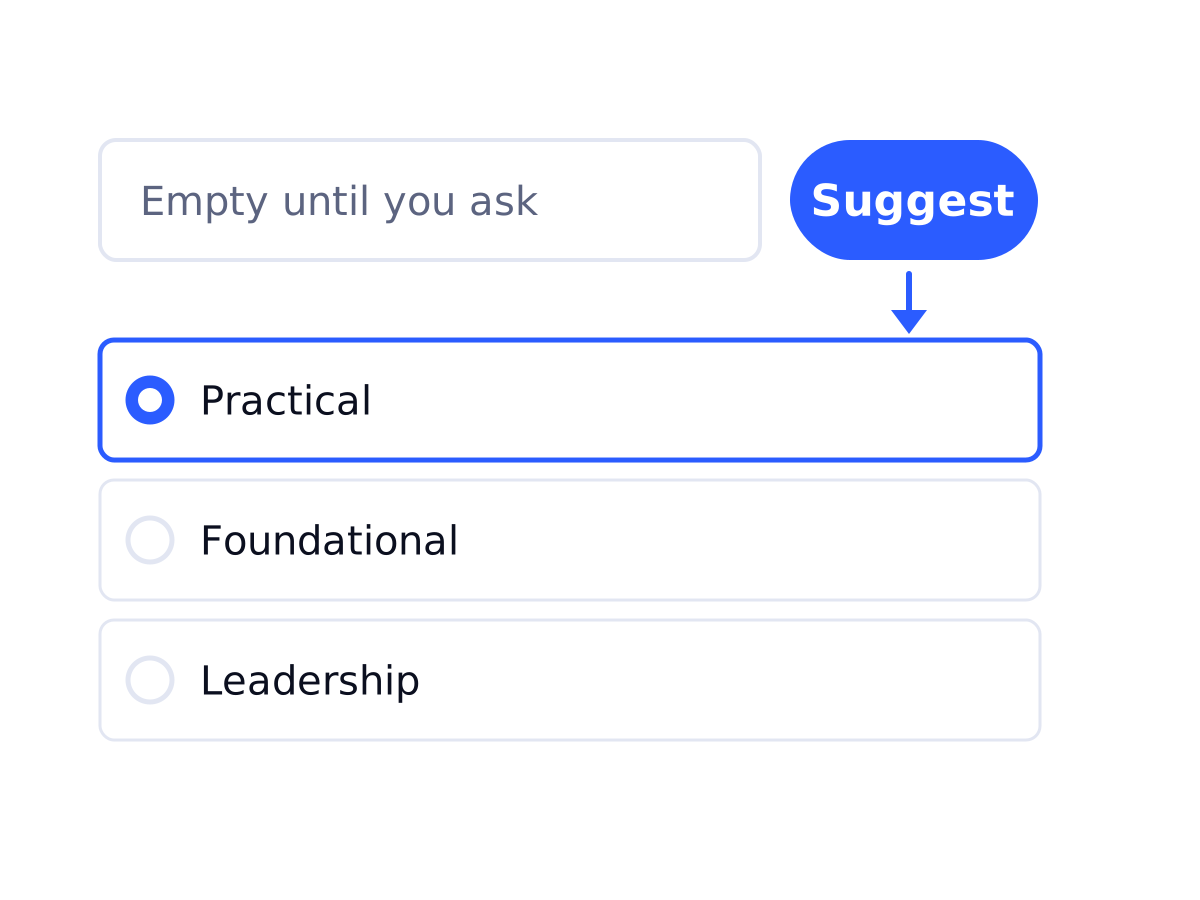
For fields that need judgement, wait until the person asks. Text that is already there anchors the choice.On-demand suggestions per field
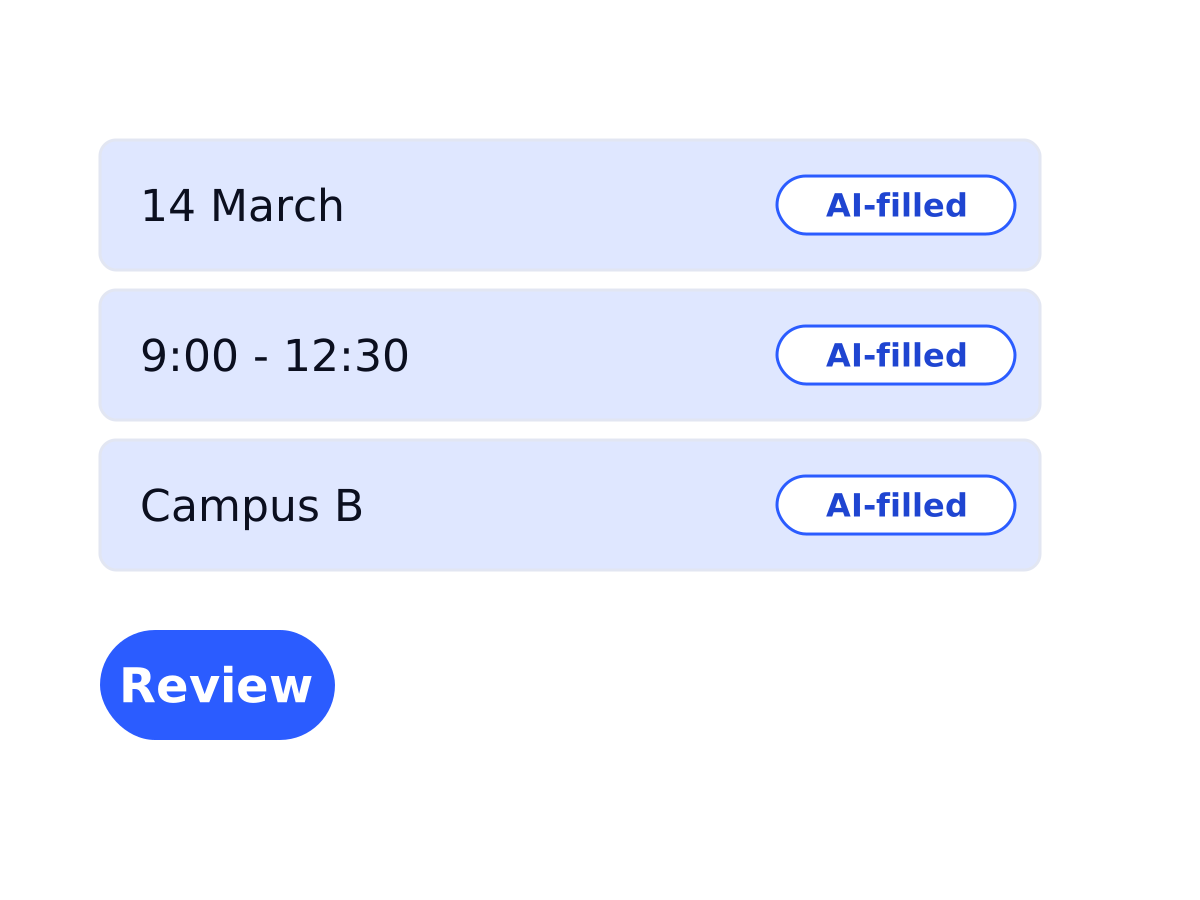
Pre-fill the facts the system can verify, mark them as AI-filled, and add one review step before submitting.Pre-filled form with review
Lessons for anyone building something similar, each linked to the card that carries the evidence. The findings below say where they come from.
In five minutesThe story, the numbers and the patterns that came out of it.
The story
VAIA aggregates AI training courses. Providers register a course through a form of more than twenty fields; submissions rarely matched the publication structure. FormFlow extracts content from a URL or pasted text and proposes field contents with a large language model. We built two paradigms and tested them with six providers in the UX Lab with eye-tracking, logs, think-aloud and interviews.
What happened next
VAIA implemented the on-demand version in its live course registration, and the study was published as a poster paper at IUI 2026 (Van den Bossche and Abdul Khalil, 2026).
Patterns in this case
3 cards carry this case as a receipt or as a context. Each card says what to build, the words on screen and how to measure it.
The full studyFor readers who want the method, the exact numbers and what we do not know.
What we compared
On-demand suggestions per field versus a pre-filled form with review; every participant did both, in counterbalanced order.
What happened
Four of six preferred on-demand. With pre-filling, participants viewed fewer alternatives (median 6.5 vs 11 fields) and chose fewer non-top suggestions (median 1 vs 2). One participant continued with pre-filled text even after noticing better alternatives.
HonestlySingle site, single domain, small sample. Indicative. Pilot. Replication planned in a second domain.
SourceVan den Bossche and Abdul Khalil (2026), From Pattern Libraries to Practice, IUI Companion, which reports this pilot · doi.org/10.1145/3742414.3794714 · study run 2025-12 · ULTRA case
A receipt is the result of one test, printed on the card: the case, what was compared, how many people took part, the main result, the methods, and what we do not know. The plan written before the analysis is the study card. How a pattern earns its label.
HonestlySingle site, single domain, small sample. Indicative. Pilot. The anchoring effect is consistent with the literature but not yet replicated.
SourceVan den Bossche and Abdul Khalil (2026), From Pattern Libraries to Practice, IUI Companion, which reports this pilot · doi.org/10.1145/3742414.3794714 · study run 2025-12 · ULTRA case
A receipt is the result of one test, printed on the card: the case, what was compared, how many people took part, the main result, the methods, and what we do not know. The plan written before the analysis is the study card. How a pattern earns its label.
Compass context
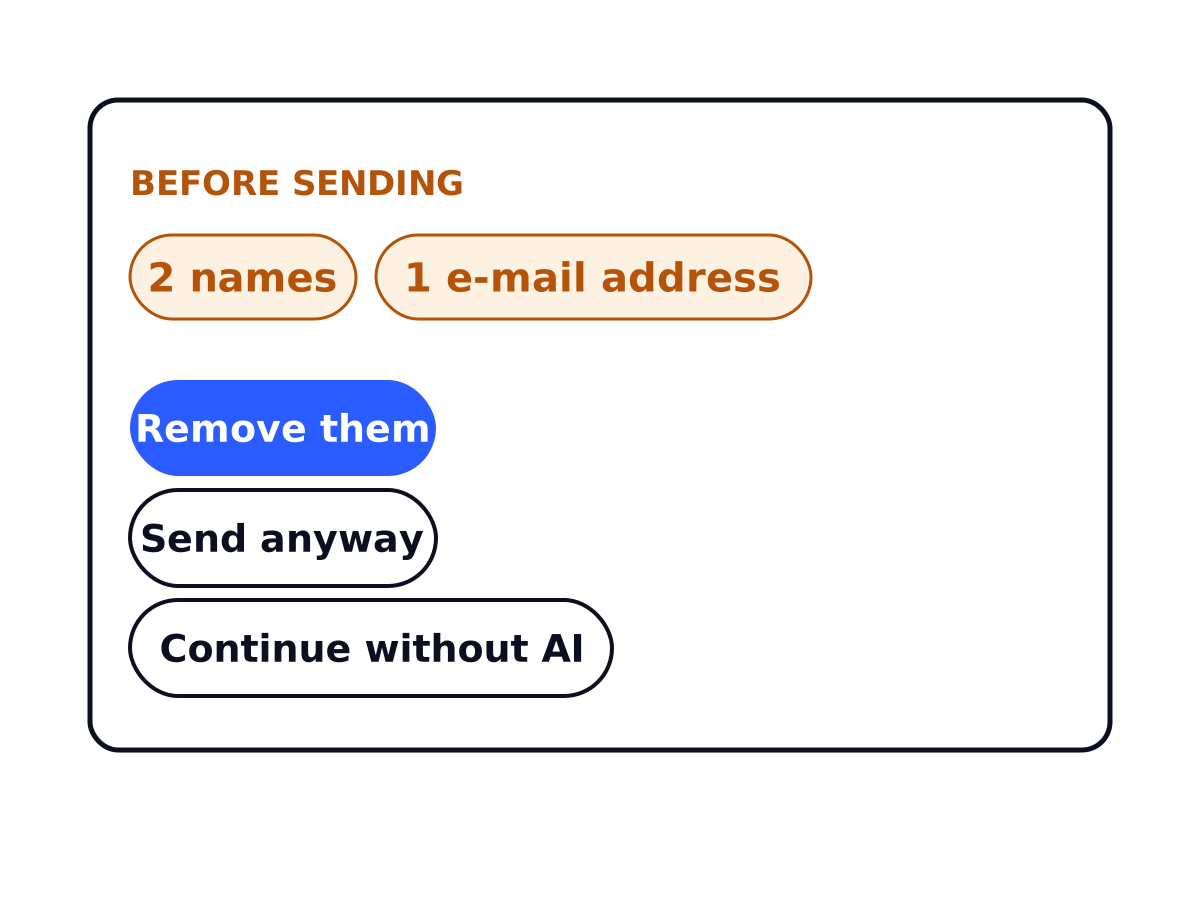
Users' AI familiarity: mixed · If wrong: some · Content: judgement · Personal data: yes · Starts: the user (how the compass reads a case)