Pattern 06 · Chat or assistant, Dashboard with AI insights · Interaction pattern
Low-confidence hand-off to a person
Practice view. What to build, the words on screen and how to measure it. Switch to Research for why it should work, the framework properties and the references.Research view. The research side is shown below the card: why it should work, the properties it targets and the references. Switch to Practice to hide it.
When confidence for a field drops below a threshold, the item is routed to a person with a short note: what the AI could not determine and what it needs. The person fills the gap; the rest stays automated.
The right amount of trustThe user stays in chargeCase: CNEXT Mail2Flow (company approval pending)
Done right, done wrong
Schematic screens, not real products. Click a screen to enlarge it.In practice
The question behind this card: when the system says “AI needs your help, low confidence in project identification”, does that raise or lower trust? The working hypothesis in the case was that the human-in-the-loop moment feels like extra work and people end up reading the full e-mail anyway. The answer decides the threshold, and it is still open.
The July test did not exercise the hand-off itself, but it said two things about it. The escalation to a person was on screen as a button called Consult partner, and participants did not understand what it meant: a hand-off has to say what the AI could not do and what the person is asked to do, in plain words. And the post-interviews drew the line the threshold should follow: four of seven would let the AI assign tasks inside the team on its own, nobody would let it send anything to a client. The hand-off can be rare for internal routing and must be the rule for anything that leaves the firm.
Words on screen
Obligations to keep in mind (AI Act, GDPR)
- Human oversight where the system is unsure; make the request small and specific. (O2, IUI 2026, Table 1)
- Say what the AI could not do, not only that it failed. (O1, IUI 2026, Table 1)
Design considerations, not legal advice or a conformity assessment. What O1 to O5 mean.
Build it
Illustrative signatures, not a published library: the names below are suggestions to adapt to your stack. Thresholds are examples to tune on your own data.
States: automated, needs-human, resolved, dismissed
Component: <HandOff reason="project" options={projects} onPick={fn} onDismiss={fn} />
Prompt snippet: When the best match scores below the threshold, return needs_human with the field name and the top three candidates instead of a guess.
Output schema: { "status": "ok | needs_human", "field": "string", "candidates": ["string"] }
Measure it
Same idea, other names
Applied by: nobody yet · Replicated by: nobody yet · Used this pattern? Tell us and get listed
Try it
Research side · why it should work
Why it should work
Properties targeted
Across contexts
| Context | Users | State | Result |
|---|---|---|---|
| CNEXT Mail2Flow, Kairos prototype | accountants, desktop | Seen in a case | the hand-off itself was not exercised in the July tasks; the escalation button 'Consult partner' was unclear to participants; four of seven would let the AI assign internal tasks without asking |
| Your context | Bring your case |
Editors
Related patterns
All patterns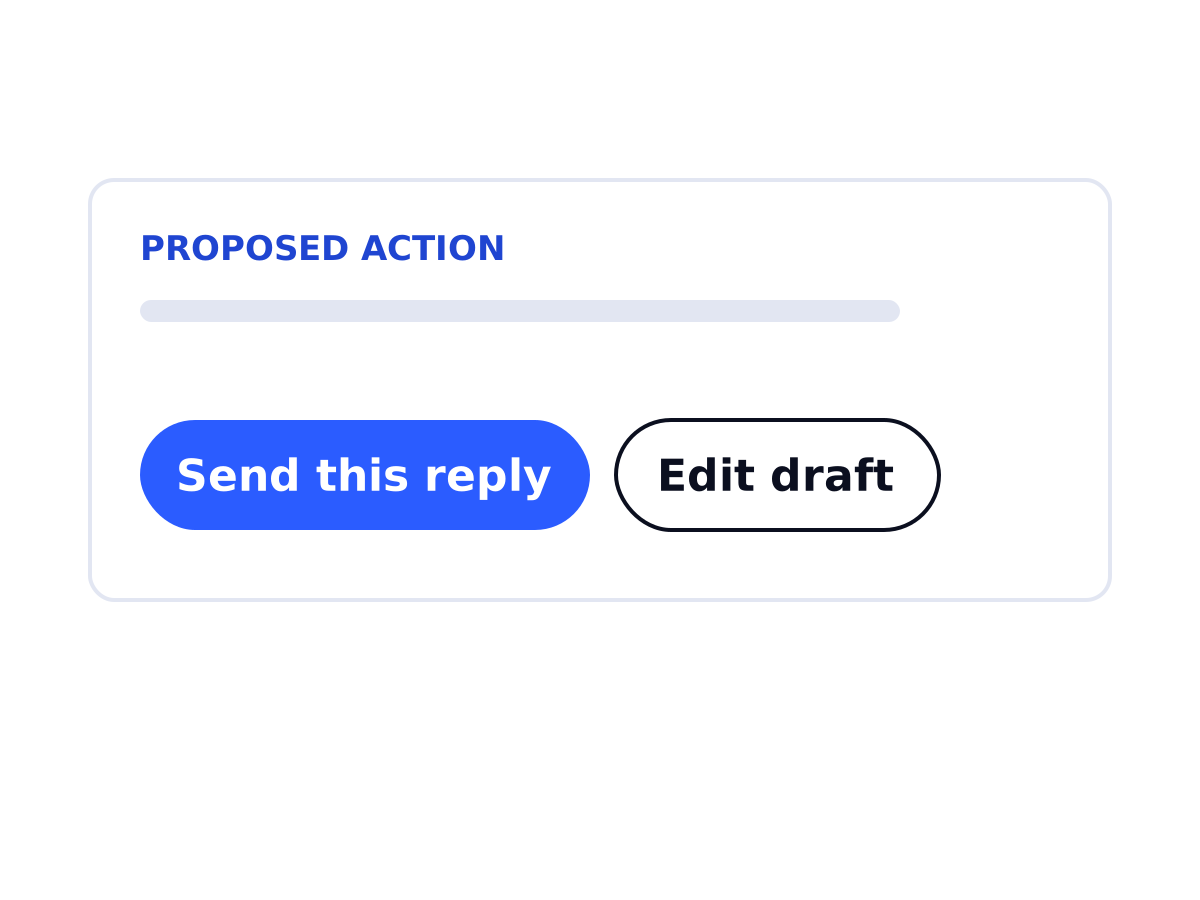 Pattern 18 · Dashboard with AI insights, Chat or assistantOne proposed action, one named buttonOne AI proposal at a time, with its verb on the button: Send this reply. Two proposals side by side: five of seven completed the task. One: all seven.Seen in a case
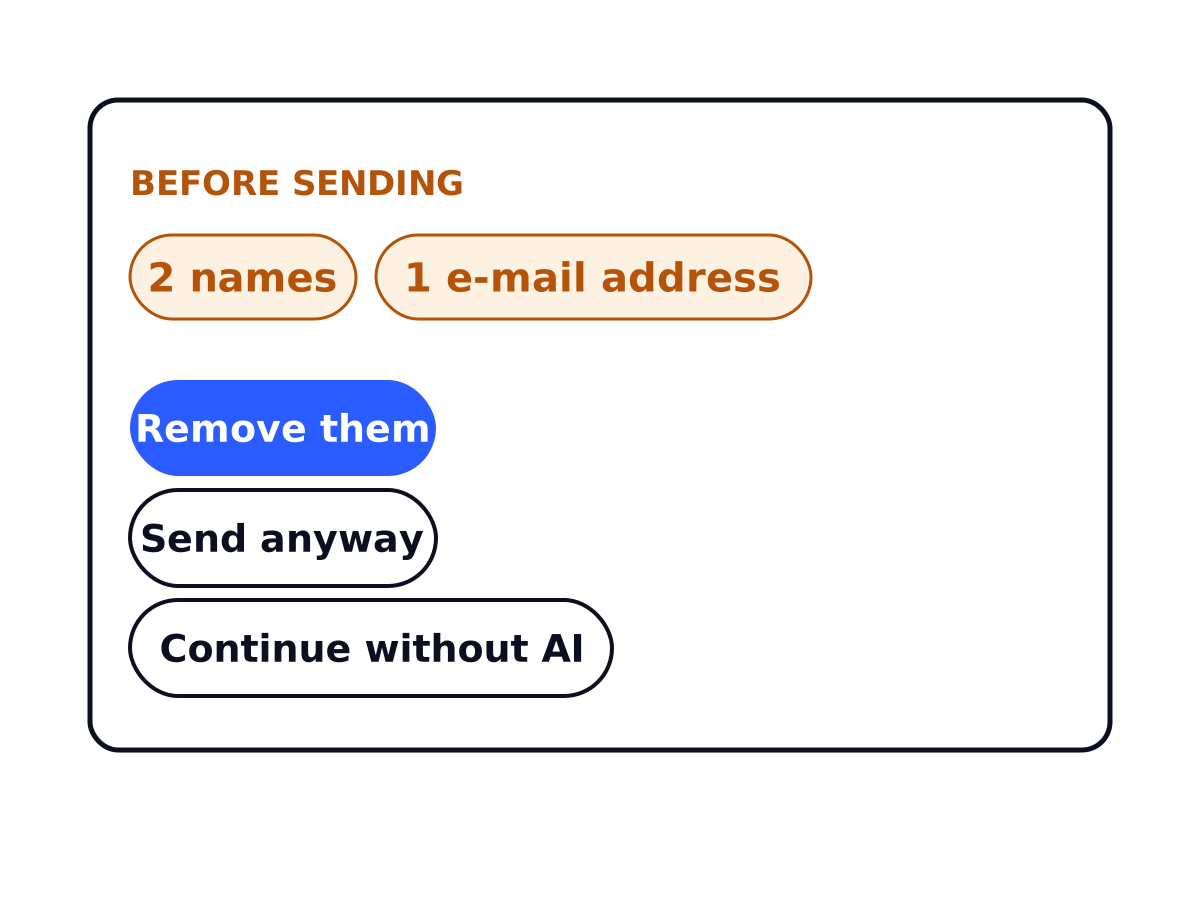 Pattern 03 · An app that adapts, Chat or assistantPrivacy check before sending personal dataBefore text goes to a model, the app spots personal data and lets the user send, strip or skip the AI step.Seen in a case
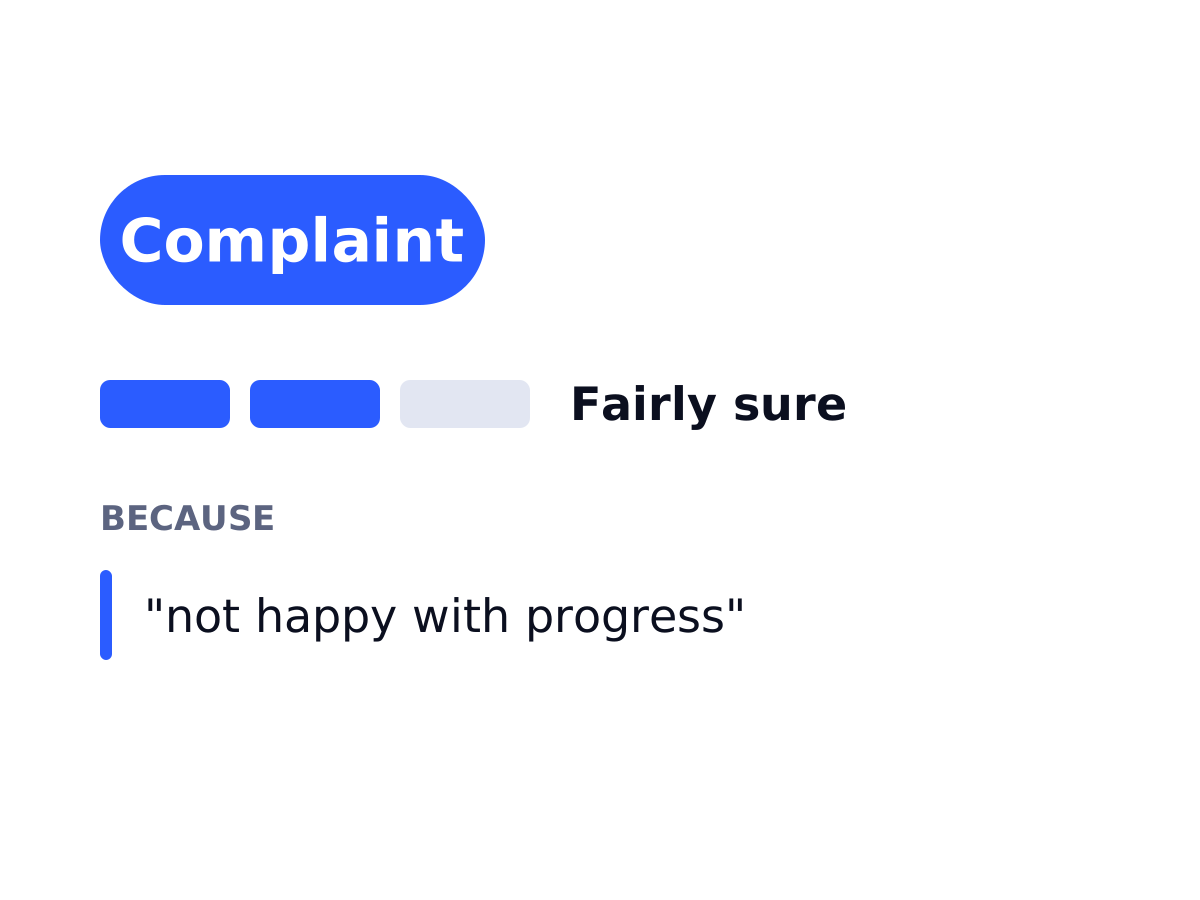 Pattern 04 · Chat or assistant, Dashboard with AI insightsClassification with confidence and reasonA label, how sure the system is, and the evidence it used, so a person can check the judgement instead of reading a bare percentage.Seen in a case