Pattern 14 · Chat or assistant · Interaction pattern
Paraphrase before you advise
Practice view. What to build, the words on screen and how to measure it. Switch to Research for why it should work, the framework properties and the references.Research view. The research side is shown below the card: why it should work, the properties it targets and the references. Switch to Practice to hide it.
Before any advice, the assistant restates the situation and the feelings the person expressed: 'I hear that you...'. Things it inferred but was not told are held back, or offered as a question to confirm.
The right amount of trustThe user stays in chargeCase: Goose conversation guide
Done right, done wrong
Schematic screens, not real products. Click a screen to enlarge it.In practice
Goose opens its analysis with observations in the person’s own terms before it offers the steps of connecting communication. In the version 3 round participants had been sceptical beforehand and were pleasantly surprised; the mirroring was one of the things that gave them trust. In the version 4 round a new problem appeared, which the team calls over-eager inference. Goose named feelings and priorities the person had not mentioned yet. Two participants, independently, said this undermined their sense of control.
The team’s fix is worth copying: an explicit list of inferred facts in the answer format, shown to the person as something to confirm or correct before the guide builds on it. That turns a silent assumption into a question, which is what a good listener does anyway. It is on our list as the candidate “Confirm what the AI assumed”; vote for it if you want it tested.
Words on screen
Obligations to keep in mind (AI Act, GDPR)
- Assumptions about a person's feelings or intentions are theirs to confirm. Show them as questions, not as facts. (O4, Goose v4)
- Mirroring sensitive statements makes the storage question urgent. Say what is kept and for how long. (O3, IUI 2026, Table 1)
Design considerations, not legal advice or a conformity assessment. What O1 to O5 mean.
Build it
Illustrative signatures, not a published library: the names below are suggestions to adapt to your stack. Thresholds are examples to tune on your own data.
States: reflecting, confirming, confirmed, corrected
Component: <Reflection said={quote} inferred={facts} onConfirm={fn} />
Prompt snippet: Restate the person's situation in one sentence using only what they wrote. Put anything you inferred in inferred_facts and ask before using it.
Output schema: { "reflection": "string", "inferred_facts": ["string"], "question": "string" }
Measure it
Same idea, other names
Applied by: nobody yet · Replicated by: nobody yet · Used this pattern? Tell us and get listed
Research side · why it should work
Why it should work
Properties targeted
Across contexts
| Context | Users | State | Result |
|---|---|---|---|
| Goose conversation guide, v3 | adults, desktop | Seen in a case | paraphrasing ('I hear that you...') strongly valued and gave trust |
| Goose conversation guide, v4 | adults, mobile | Seen in a case | over-eager inference undermined the feeling of control for 2 of 4 |
| Your context | Bring your case |
Editors
Related patterns
All patterns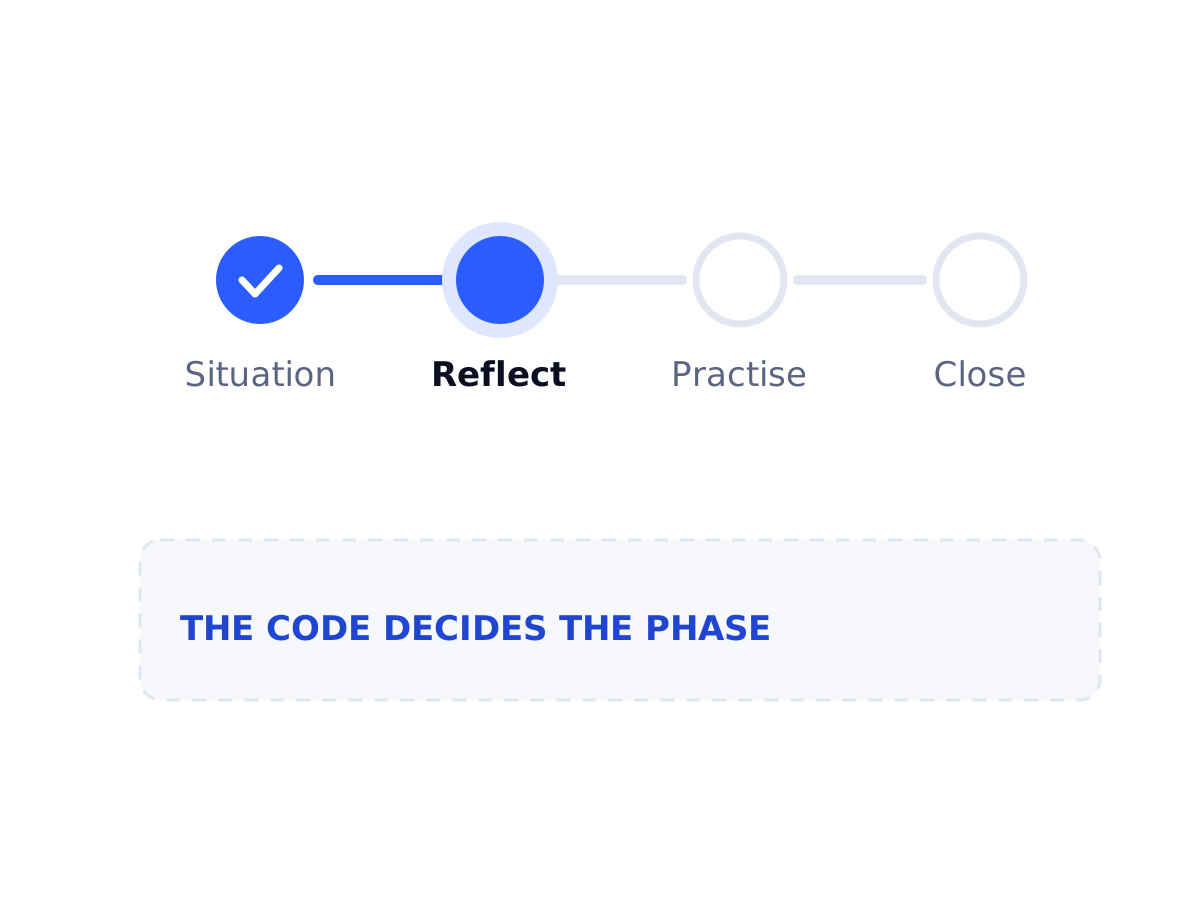 Pattern 11 · Chat or assistantStaged conversation: the code decidesThe conversation always sits in one named phase. The model can only signal readiness; the app decides when to move on, refuse or repeat.Seen in a case
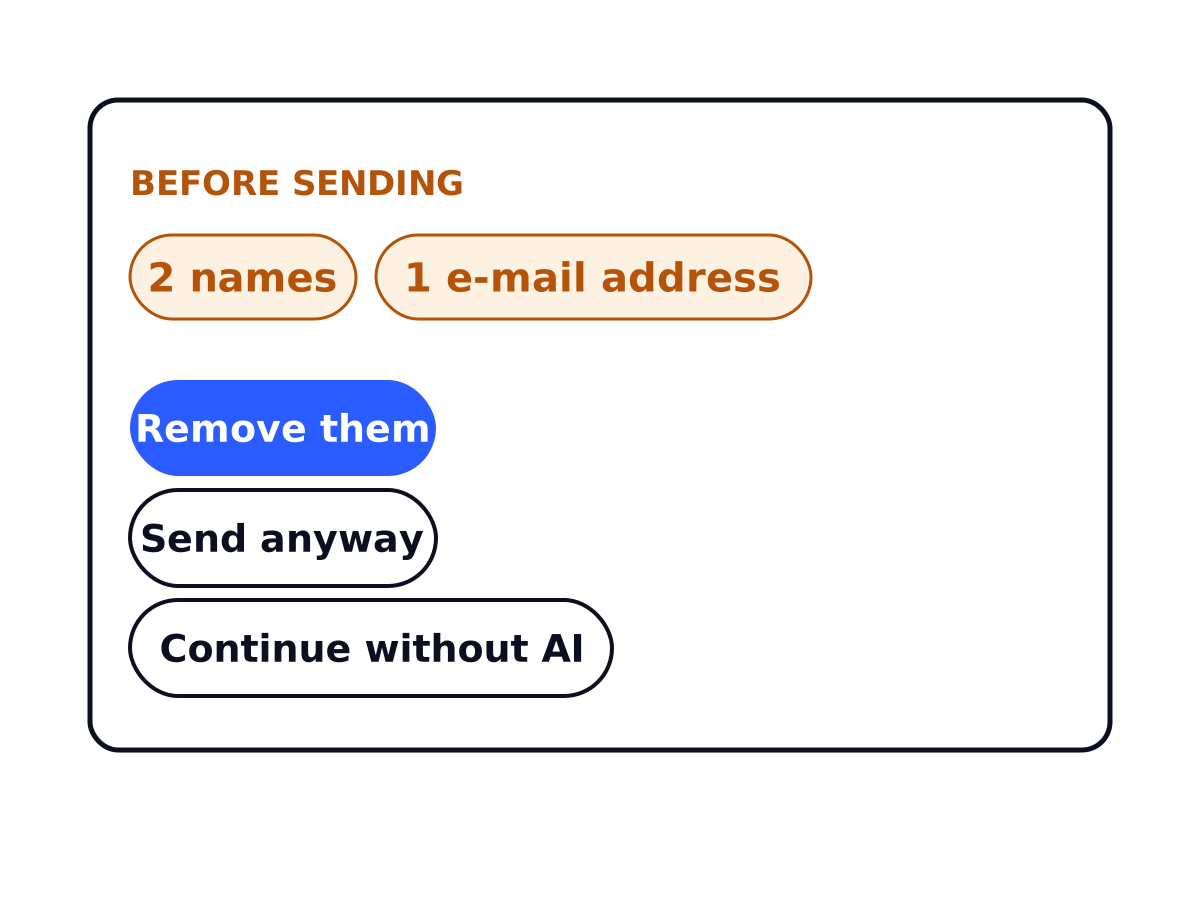 Pattern 03 · An app that adapts, Chat or assistantPrivacy check before sending personal dataBefore text goes to a model, the app spots personal data and lets the user send, strip or skip the AI step.Seen in a case
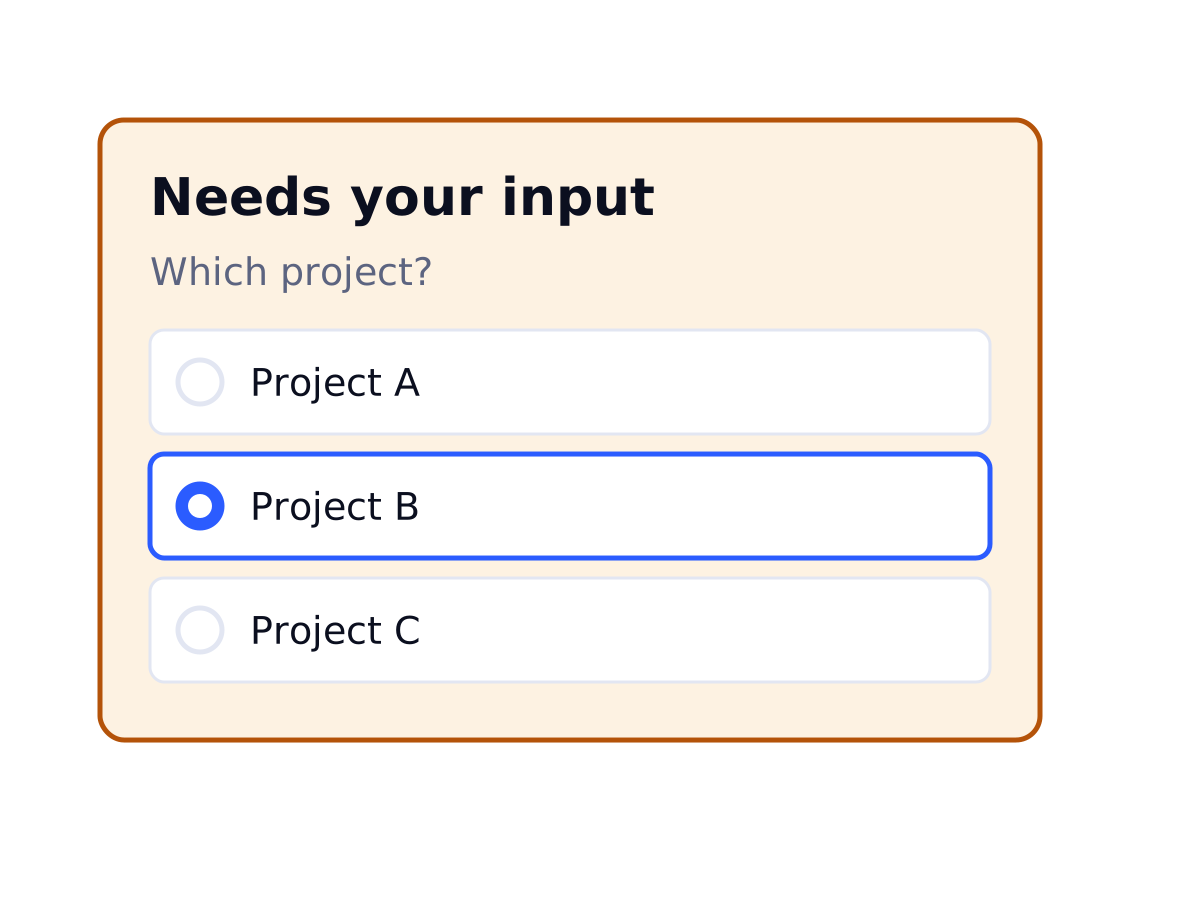 Pattern 06 · Chat or assistant, Dashboard with AI insightsLow-confidence hand-off to a personBelow a threshold the AI stops, says what it could not determine, and hands the item to a person instead of guessing.Seen in a case