Pattern 07 · Dashboard with AI insights, Chat or assistant · Explanation pattern
Why is this urgent
Practice view. What to build, the words on screen and how to measure it. Switch to Research for why it should work, the framework properties and the references.Research view. The research side is shown below the card: why it should work, the properties it targets and the references. Switch to Practice to hide it.
Next to an AI judgement such as urgency or category, a small "why" reveals one sentence quoted or derived from the source that justifies it.
The system shows how it worksCase: CNEXT Mail2Flow (company approval pending)
Done right, done wrong
Schematic screens, not real products. Click a screen to enlarge it.In practice
The pattern was drawn for this case’s design prototype, where opening an e-mail shows why it was classified as urgent, the original e-mail and the actions. The prototype tested in July did not carry it, and the test showed where the one-liner is missing rather than whether it is read: the AI’s proposed actions came without a reason, several participants questioned the AI’s logic, and one asked outright why it proposed what it proposed. The report’s recommendation is a ‘Why this suggestion?’ line under each proposed action, which is this pattern applied to actions instead of labels.
Words on screen
Obligations to keep in mind (AI Act, GDPR)
- Make the reason checkable against the source so people can overrule it. (O2, IUI 2026, Table 1)
Design considerations, not legal advice or a conformity assessment. What O1 to O5 mean.
Build it
Illustrative signatures, not a published library: the names below are suggestions to adapt to your stack. Thresholds are examples to tune on your own data.
States: collapsed, open, disputed
Component: <WhyThis reason={reason} quote={quote} onDisagree={fn} />
Prompt snippet: Return the single sentence from the input that best justifies the judgement, quoted verbatim, and a five-word paraphrase.
Measure it
Same idea, other names
Applied by: nobody yet · Replicated by: nobody yet · Used this pattern? Tell us and get listed
Try it
Research side · why it should work
Why it should work
Properties targeted
Across contexts
| Context | Users | State | Result |
|---|---|---|---|
| CNEXT Mail2Flow, Kairos prototype | accountants, desktop | Seen in a case | drawn for the case's design prototype; not in the July test, where several participants questioned the AI's logic and one asked why it proposed what it proposed |
| Your context | Bring your case |
Editors
Related patterns
All patterns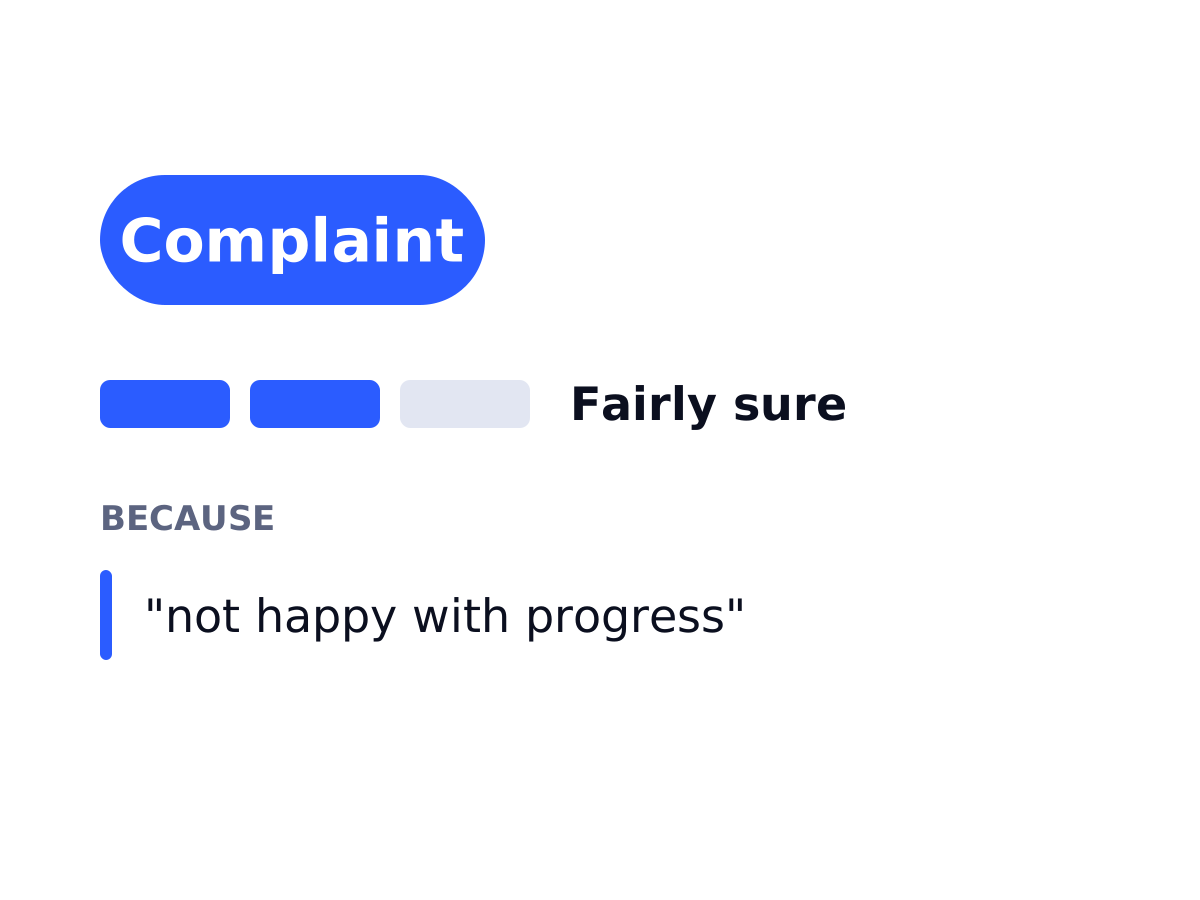 Pattern 04 · Chat or assistant, Dashboard with AI insightsClassification with confidence and reasonA label, how sure the system is, and the evidence it used, so a person can check the judgement instead of reading a bare percentage.Seen in a case
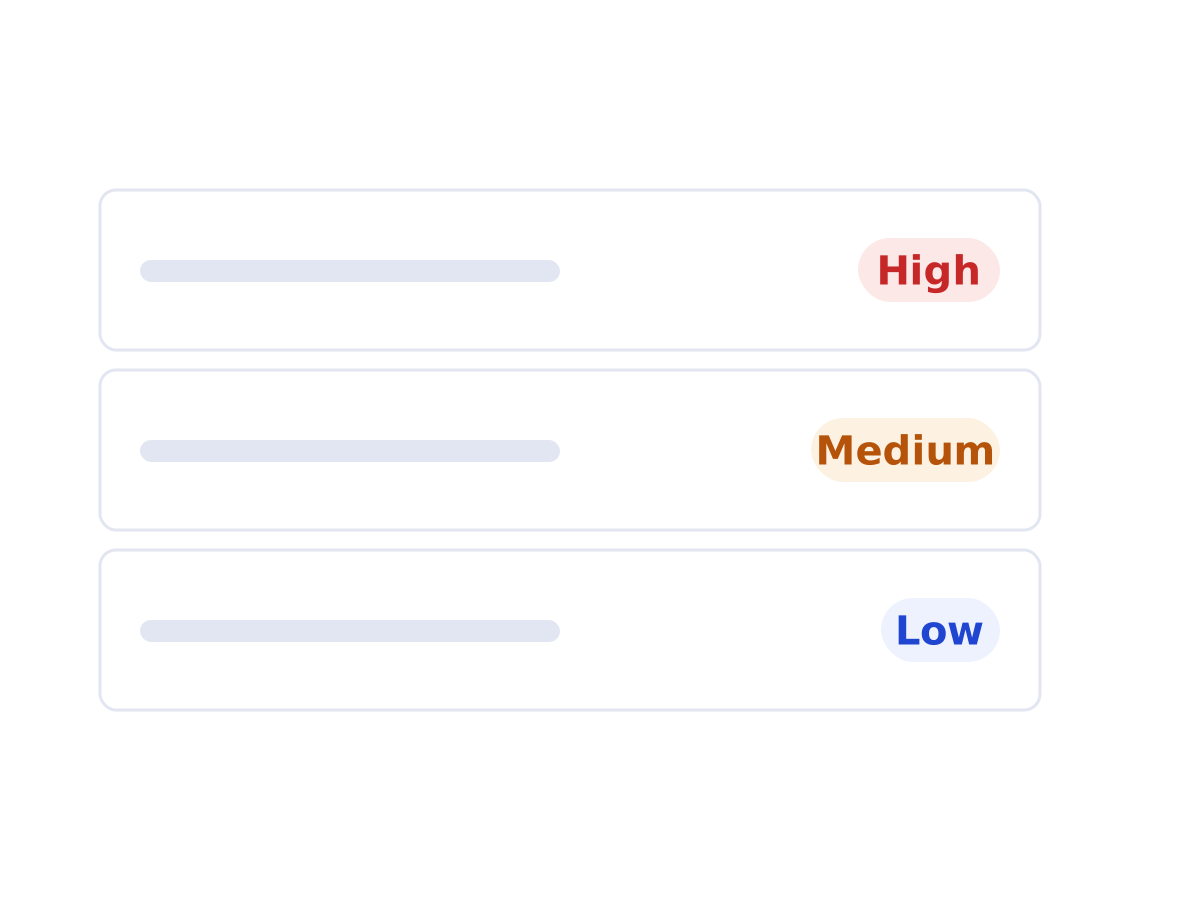 Pattern 05 · Dashboard with AI insights, Chat or assistantUrgency labels for prioritisationA small set of urgency levels on every item, so a full inbox can be scanned in seconds and the order of work is explicit.Seen in a case
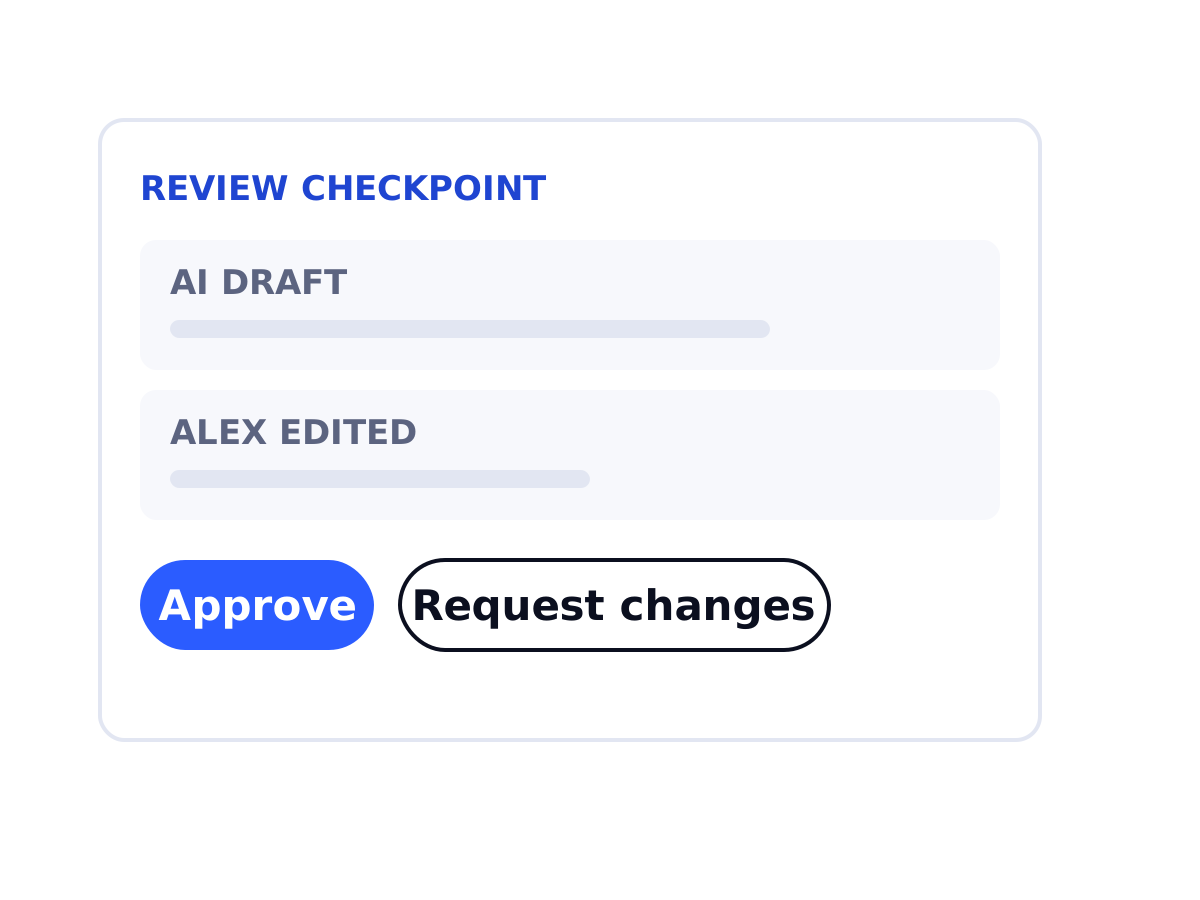 Pattern 08 · Dashboard with AI insightsReview a colleague's work checkpointAI-prepared work by a junior reaches a senior with the source, the junior's note and two clear actions.Seen in a case