Pattern 15 · Chat or assistant · Interaction pattern
Show an example, not a rule
Practice view. What to build, the words on screen and how to measure it. Switch to Research for why it should work, the framework properties and the references.Research view. The research side is shown below the card: why it should work, the properties it targets and the references. Switch to Practice to hide it.
Advice is shown as a short rule plus an example line in the person's own situation, in quotes and marked as a suggestion to adapt. The person can ask for another example or write their own version.
The user stays in chargeThe system adapts to the personCase: Goose conversation guide
Done right, done wrong
Schematic screens, not real products. Click a screen to enlarge it.In practice
Goose’s advice screen lists the four steps of connecting communication, and under each step it puts a sentence for this situation: “I noticed the smell in your room and it worries me” under observe without judging, “I feel uneasy because I care about your health” under name your feeling. A button asks for an opening line; another asks for a different suggestion. In both test rounds this was what people came back to.
Two details keep the pattern honest. The examples are in quotes and visibly generated, so nobody mistakes them for the only right answer. And the person can ask for another or write their own; the guide never puts words in their mouth, it lends them some.
Words on screen
Obligations to keep in mind (AI Act, GDPR)
- Keep authorship with the person. Examples are offered, never inserted. (O4, IUI 2026, Table 1)
- Mark examples as generated suggestions that may not fit the situation. (O1, IUI 2026, Table 1)
Design considerations, not legal advice or a conformity assessment. What O1 to O5 mean.
Build it
Illustrative signatures, not a published library: the names below are suggestions to adapt to your stack. Thresholds are examples to tune on your own data.
States: tip, example-shown, another-requested, own-version
Component: <TipWithExample rule={text} example={text} onAnother={fn} onOwn={fn} />
Prompt snippet: For each tip, add one example sentence in the person's situation, under 25 words, in quotes.
Output schema: { "tip": "string", "example": "string" }
Measure it
Same idea, other names
Applied by: nobody yet · Replicated by: nobody yet · Used this pattern? Tell us and get listed
Research side · why it should work
Why it should work
Properties targeted
Across contexts
| Context | Users | State | Result |
|---|---|---|---|
| Goose conversation guide, v3 | adults, desktop | Seen in a case | the most valued feature |
| Goose conversation guide, v4 | adults, mobile | Seen in a case | still the most valued feature |
| Your context | Bring your case |
Editors
Related patterns
All patterns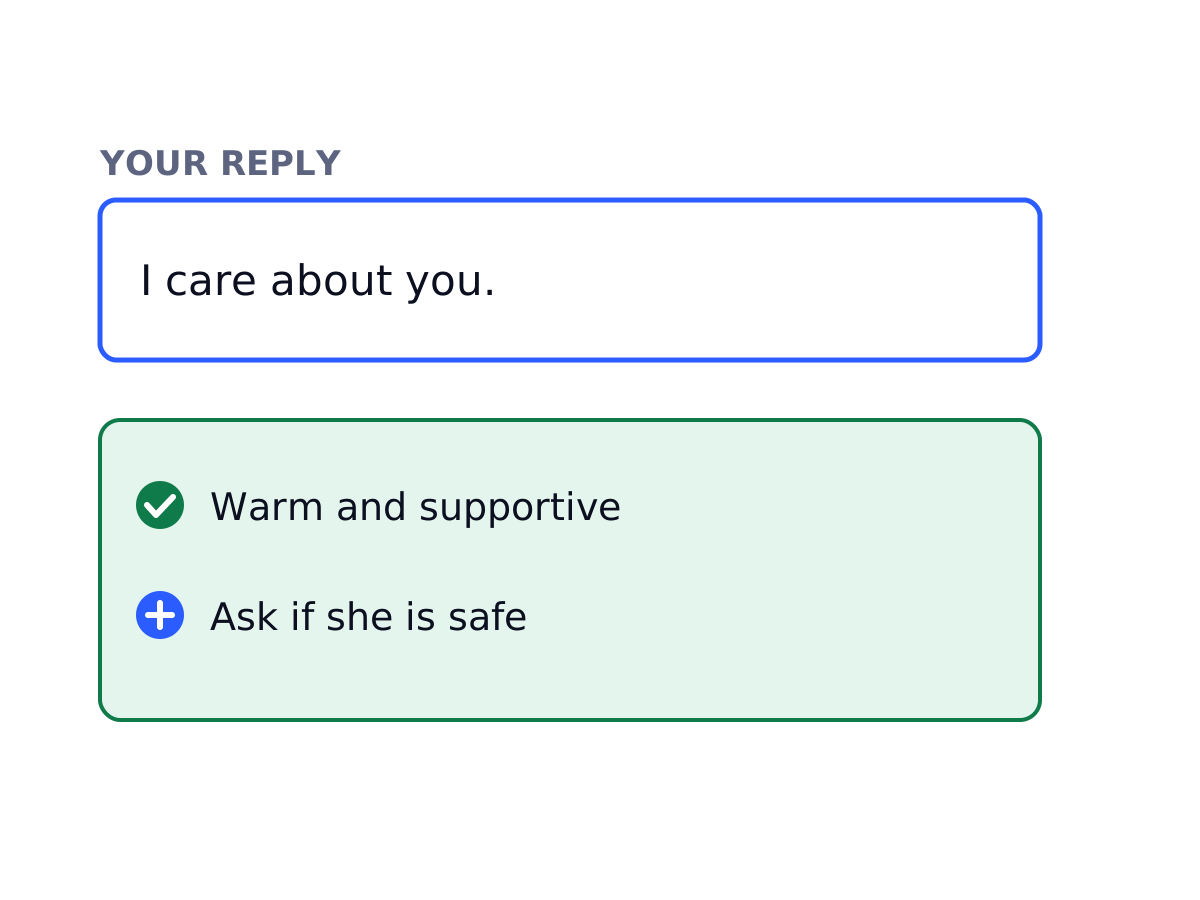 Pattern 16 · Chat or assistantYour words first, then feedbackIn practice mode the person writes the reply; the assistant gives feedback on it instead of writing it. The skill stays with the person.Seen in a case
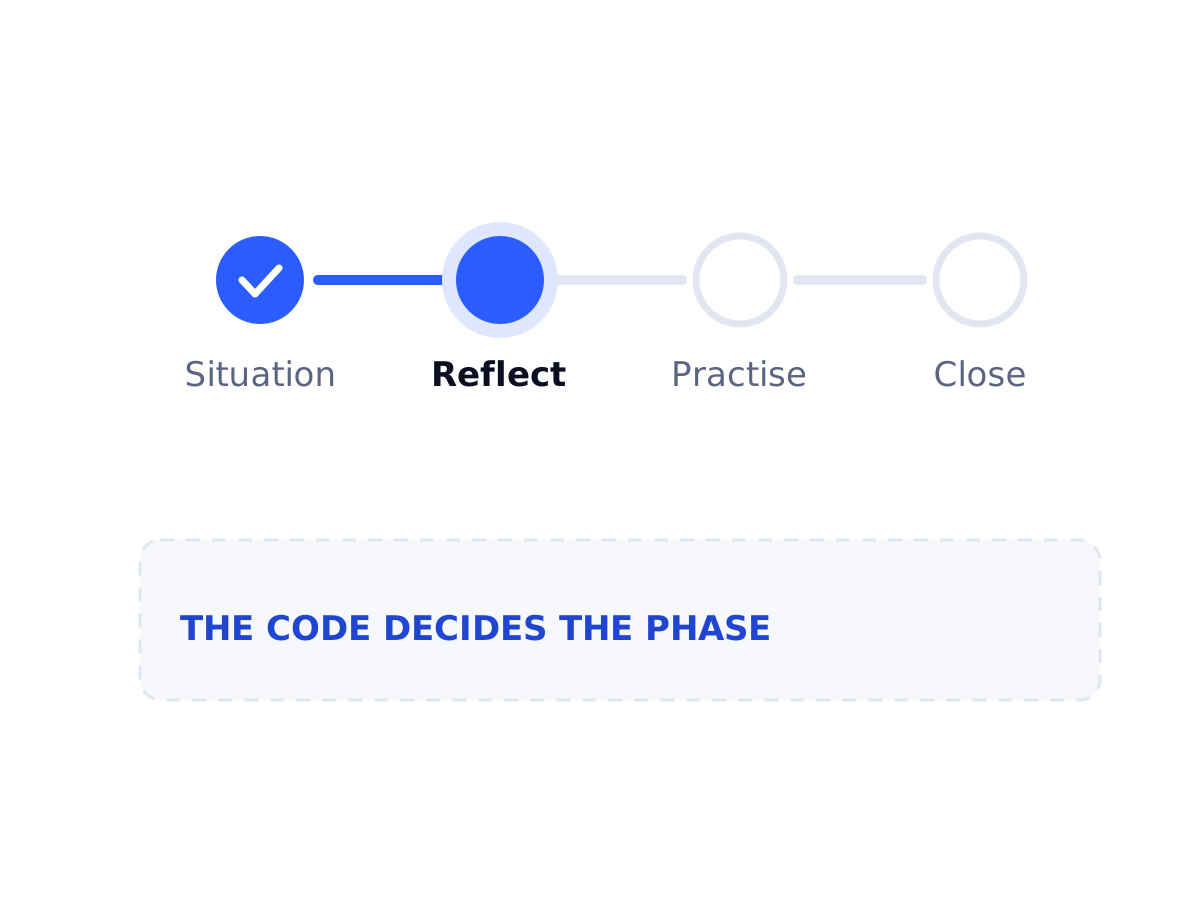 Pattern 11 · Chat or assistantStaged conversation: the code decidesThe conversation always sits in one named phase. The model can only signal readiness; the app decides when to move on, refuse or repeat.Seen in a case
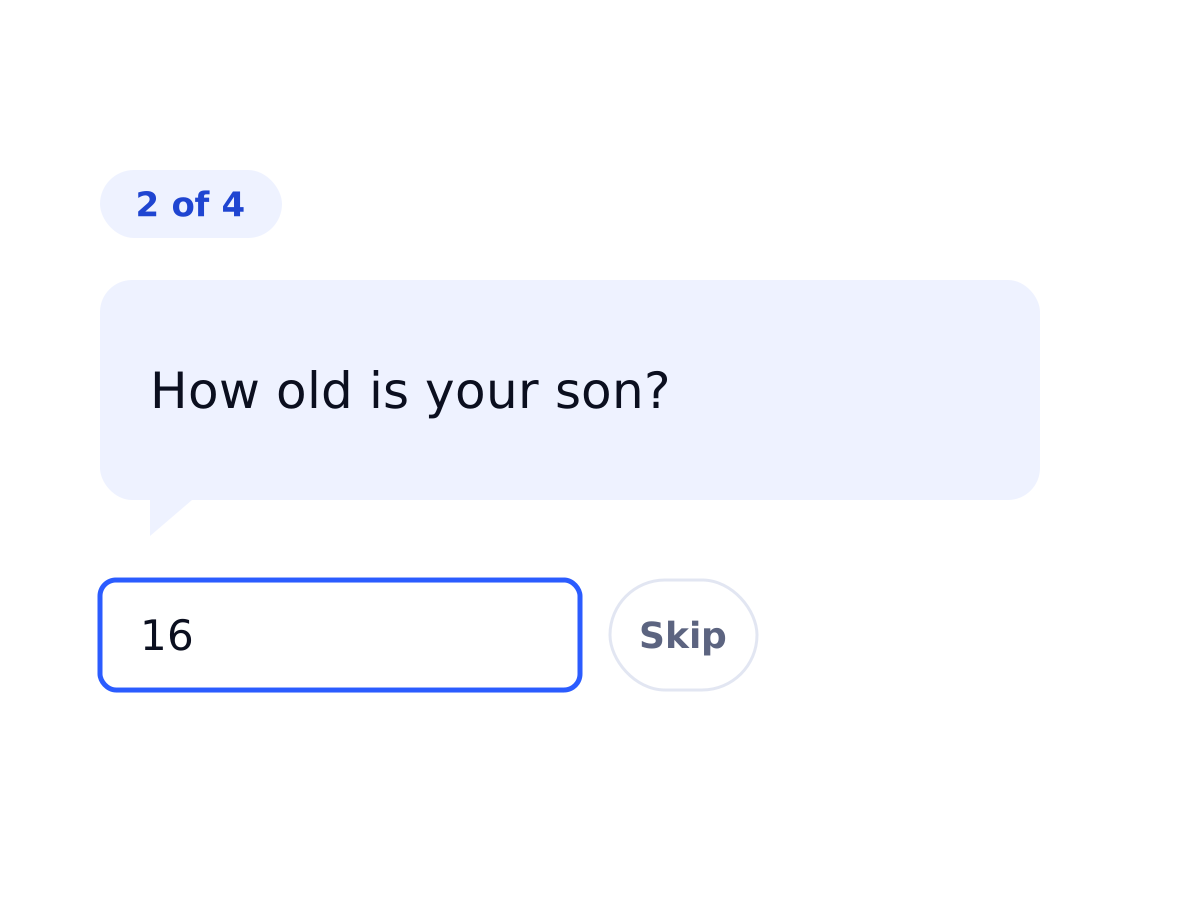 Pattern 12 · Chat or assistantOne question per turnEach assistant turn asks exactly one thing. People answer without juggling, and the answer format makes the rule enforceable.Seen in a case