Pattern 16 · Chat or assistant · Interaction pattern
Your words first, then feedback
Practice view. What to build, the words on screen and how to measure it. Switch to Research for why it should work, the framework properties and the references.Research view. The research side is shown below the card: why it should work, the properties it targets and the references. Switch to Practice to hide it.
A practice mode shows a situation, the person writes a response, and the assistant reviews it against a few named criteria (warm, concrete, checks safety) with one strength and one improvement. The assistant never replaces the person's text.
The user stays in chargeThe system adapts to the personCase: Goose conversation guide
Done right, done wrong
Schematic screens, not real products. Click a screen to enlarge it.In practice
Goose’s simulation mode presents a message from a friend, asks the person to write their reply, and then shows feedback in a separate panel: what works in the reply, and one thing to add, such as asking whether the friend feels safe. The steering group’s wish was that this feedback speaks the language of connecting communication too, so the practice teaches the method and not only manners.
One finding to design around: the role play let people swap roles, and that confused them. Keep the roles fixed in a practice turn. The person always writes as themselves, the assistant always plays the other side and the reviewer, and the screen says which is which.
Words on screen
Obligations to keep in mind (AI Act, GDPR)
- The person's text stays the person's. Feedback edits nothing without consent. (O4, IUI 2026, Table 1)
- Say what the feedback is based on, so it is a review against criteria and not a verdict from nowhere. (O1, IUI 2026, Table 1)
Design considerations, not legal advice or a conformity assessment. What O1 to O5 mean.
Build it
Illustrative signatures, not a published library: the names below are suggestions to adapt to your stack. Thresholds are examples to tune on your own data.
States: scenario, writing, feedback, retry
Component: <PracticeTurn scenario={s} criteria={[warm, concrete, safety]} onSubmit={fn} />
Prompt snippet: Review the person's reply against: warm, concrete, checks safety. Give one strength and one improvement. Do not rewrite the reply.
Output schema: { "strength": "string", "improvement": "string", "criteria_met": ["string"] }
Measure it
Same idea, other names
Applied by: nobody yet · Replicated by: nobody yet · Used this pattern? Tell us and get listed
Research side · why it should work
Why it should work
Properties targeted
Across contexts
| Context | Users | State | Result |
|---|---|---|---|
| Goose conversation guide, v4 | adults, mobile | Seen in a case | feedback panel valued; the role-switch in the role play confused participants |
| Your context | Bring your case |
Editors
Related patterns
All patterns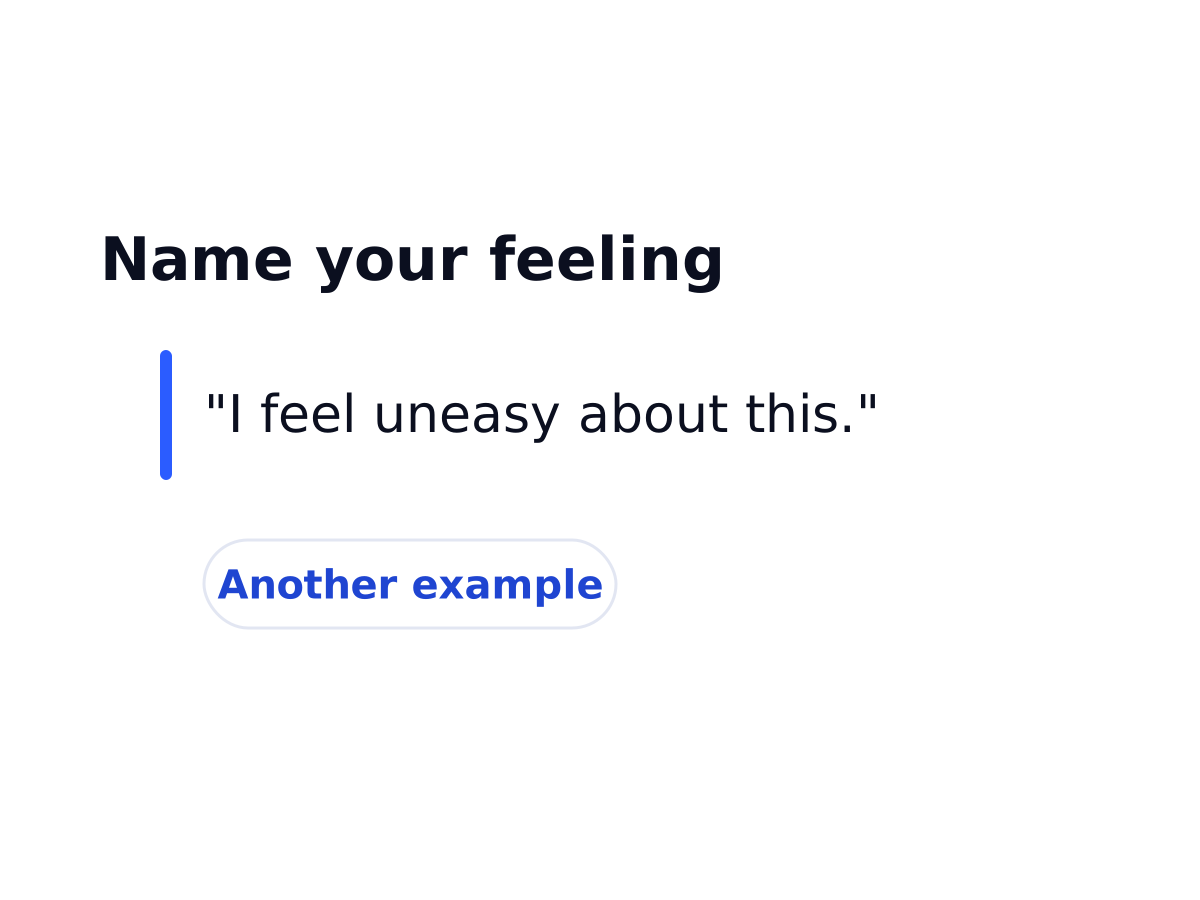 Pattern 15 · Chat or assistantShow an example, not a ruleEvery tip comes with a sentence the person could actually say. In both Goose rounds, the example dialogue was the most valued feature.Seen in a case
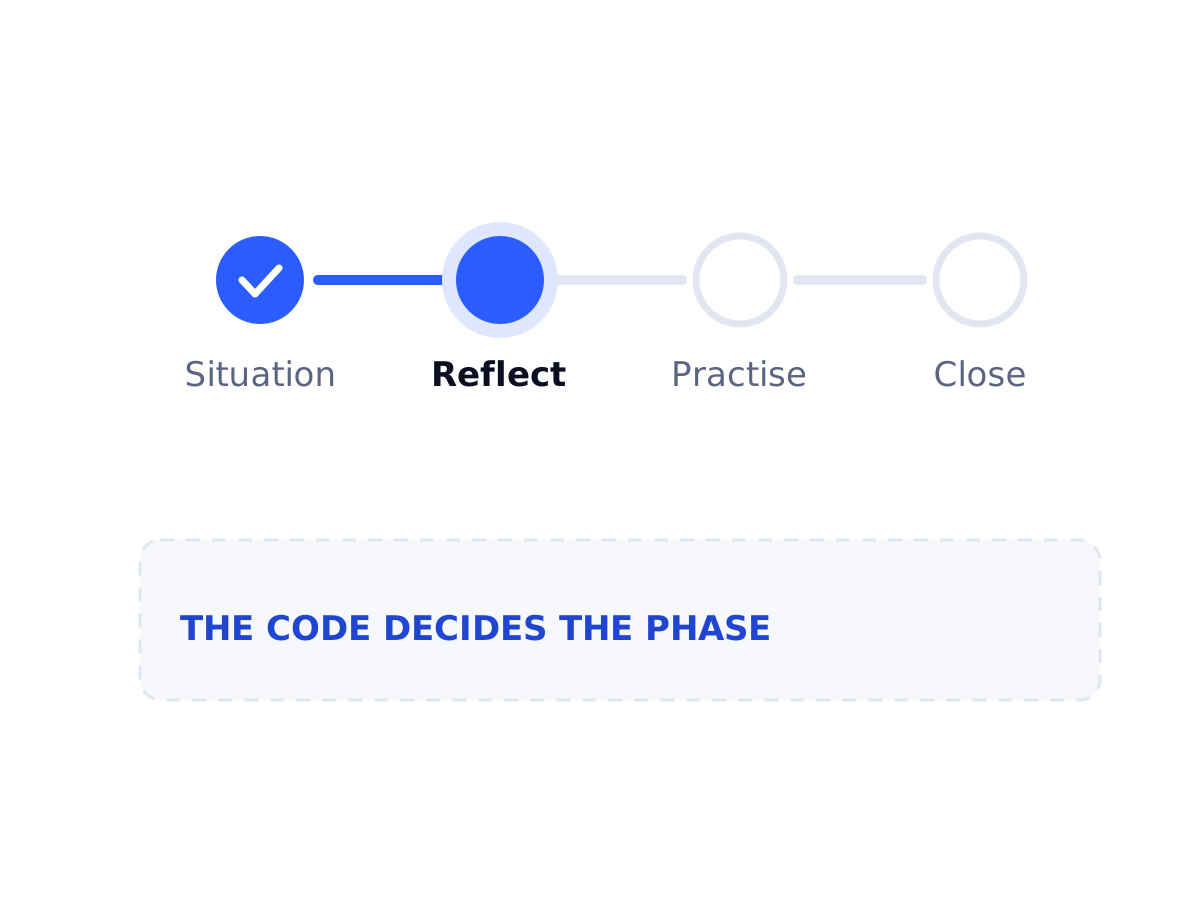 Pattern 11 · Chat or assistantStaged conversation: the code decidesThe conversation always sits in one named phase. The model can only signal readiness; the app decides when to move on, refuse or repeat.Seen in a case
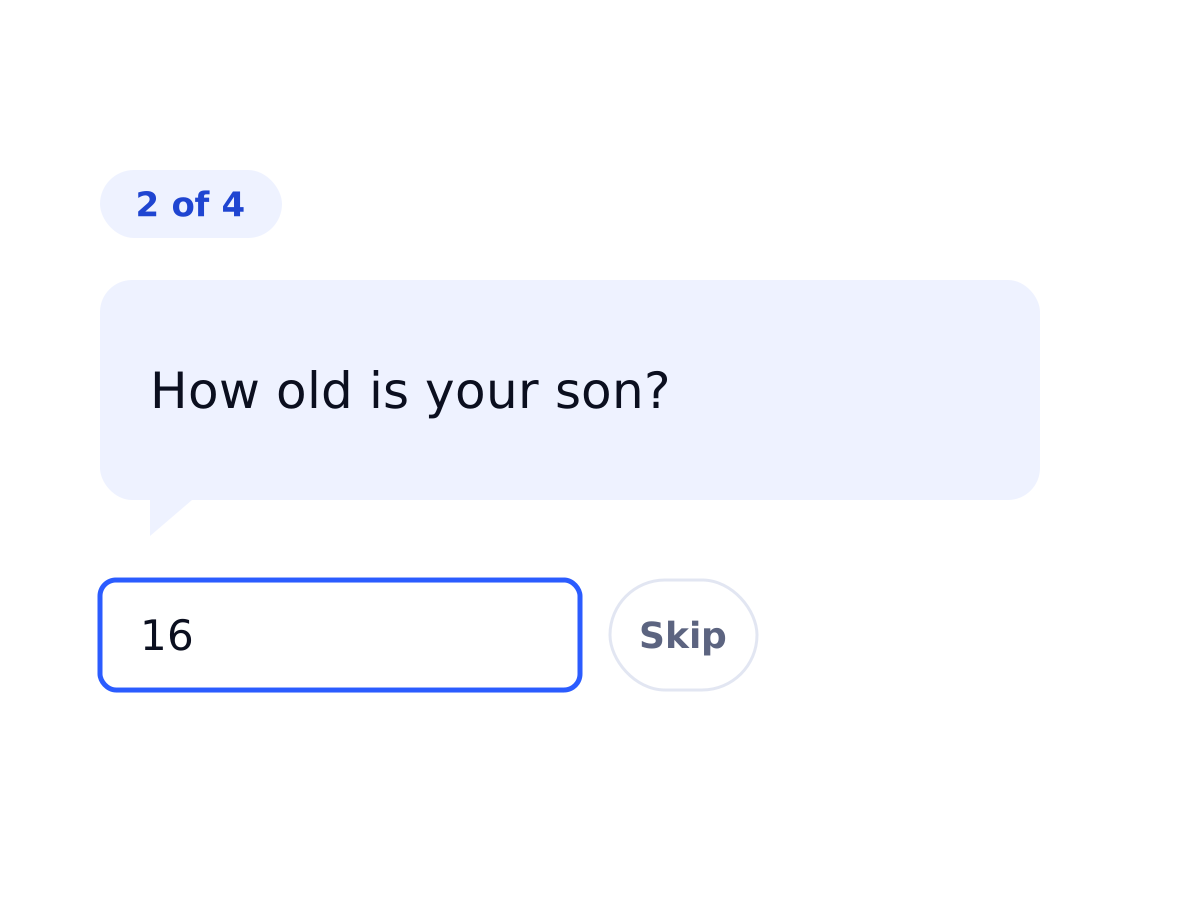 Pattern 12 · Chat or assistantOne question per turnEach assistant turn asks exactly one thing. People answer without juggling, and the answer format makes the rule enforceable.Seen in a case