Pattern 10 · Chat or assistant · Explanation pattern
Why this question
Practice view. What to build, the words on screen and how to measure it. Switch to Research for why it should work, the framework properties and the references.Research view. The research side is shown below the card: why it should work, the properties it targets and the references. Switch to Practice to hide it.
Each follow-up question from the assistant carries a short reason, such as "so I can match you with experts in your sector", visible before the user answers.
The system shows how it worksThe right amount of trustCase: FORCIT Signal Studio (company approval pending)
Done right, done wrong
Schematic screens, not real products. Click a screen to enlarge it.In practice
Signal Studio’s guided conversation asks a few questions to sharpen a challenge before matching. The variant with reasons is one of the candidates for the FORCIT user test, alongside the highest-value-question and one-question-plus-fast-lane variants.
Words on screen
Obligations to keep in mind (AI Act, GDPR)
- Say what the answer is used for; it is also the honest way to ask for data. (O1, IUI 2026, Table 1)
Design considerations, not legal advice or a conformity assessment. What O1 to O5 mean.
Build it
Illustrative signatures, not a published library: the names below are suggestions to adapt to your stack. Thresholds are examples to tune on your own data.
States: asked, answered, skipped
Component: <FollowUp question={q} reason={r} onSkip={fn} />
Prompt snippet: For each follow-up question, return a reason under twelve words that names the downstream benefit for the user. Skip questions without a reason.
Measure it
Same idea, other names
Applied by: nobody yet · Replicated by: nobody yet · Used this pattern? Tell us and get listed
Try it
Research side · why it should work
Why it should work
Properties targeted
Across contexts
| Context | Users | State | Result |
|---|---|---|---|
| FORCIT challenge brief | innovation managers | Seen in a case | pattern 16 of 26 in Signal Studio; user test to be scheduled |
| Your context | Bring your case |
Editors
Related patterns
All patterns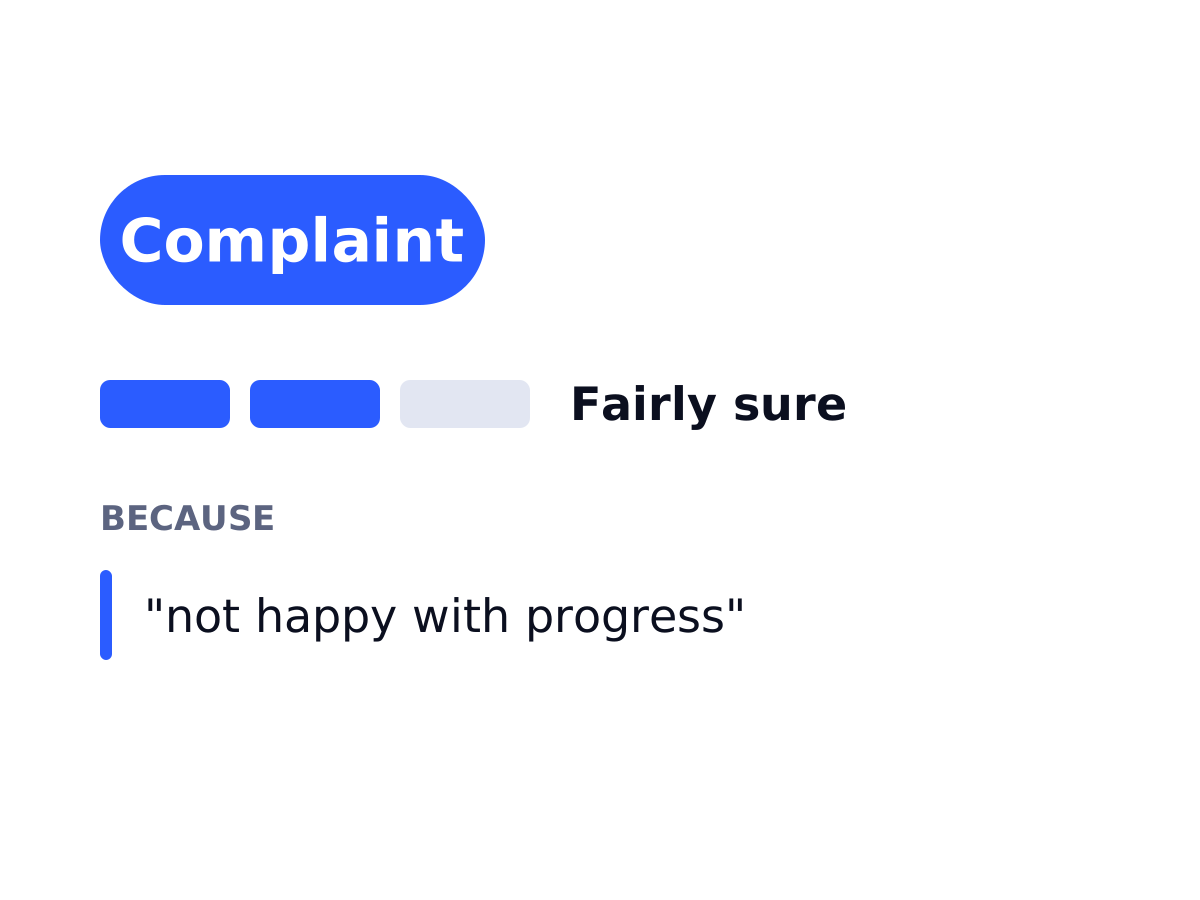 Pattern 04 · Chat or assistant, Dashboard with AI insightsClassification with confidence and reasonA label, how sure the system is, and the evidence it used, so a person can check the judgement instead of reading a bare percentage.Seen in a case
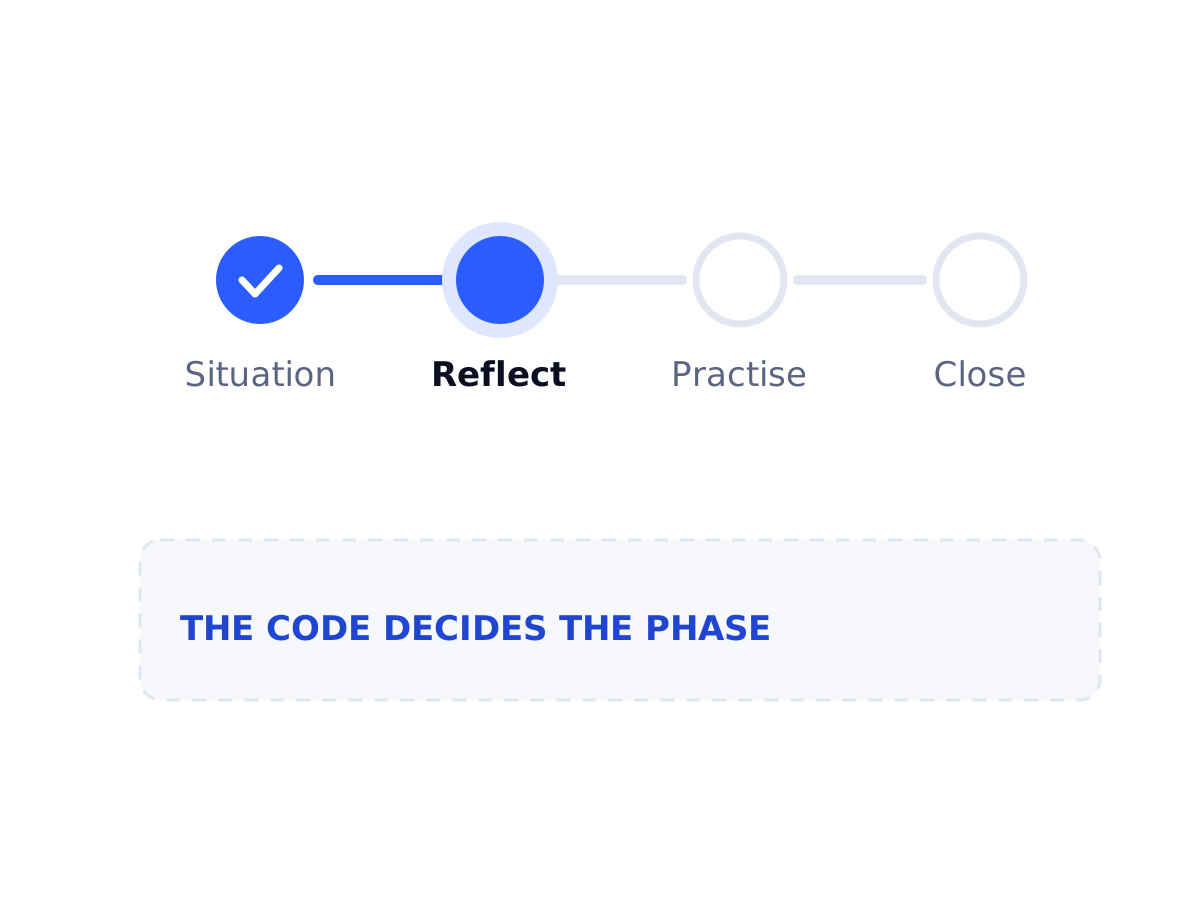 Pattern 11 · Chat or assistantStaged conversation: the code decidesThe conversation always sits in one named phase. The model can only signal readiness; the app decides when to move on, refuse or repeat.Seen in a case
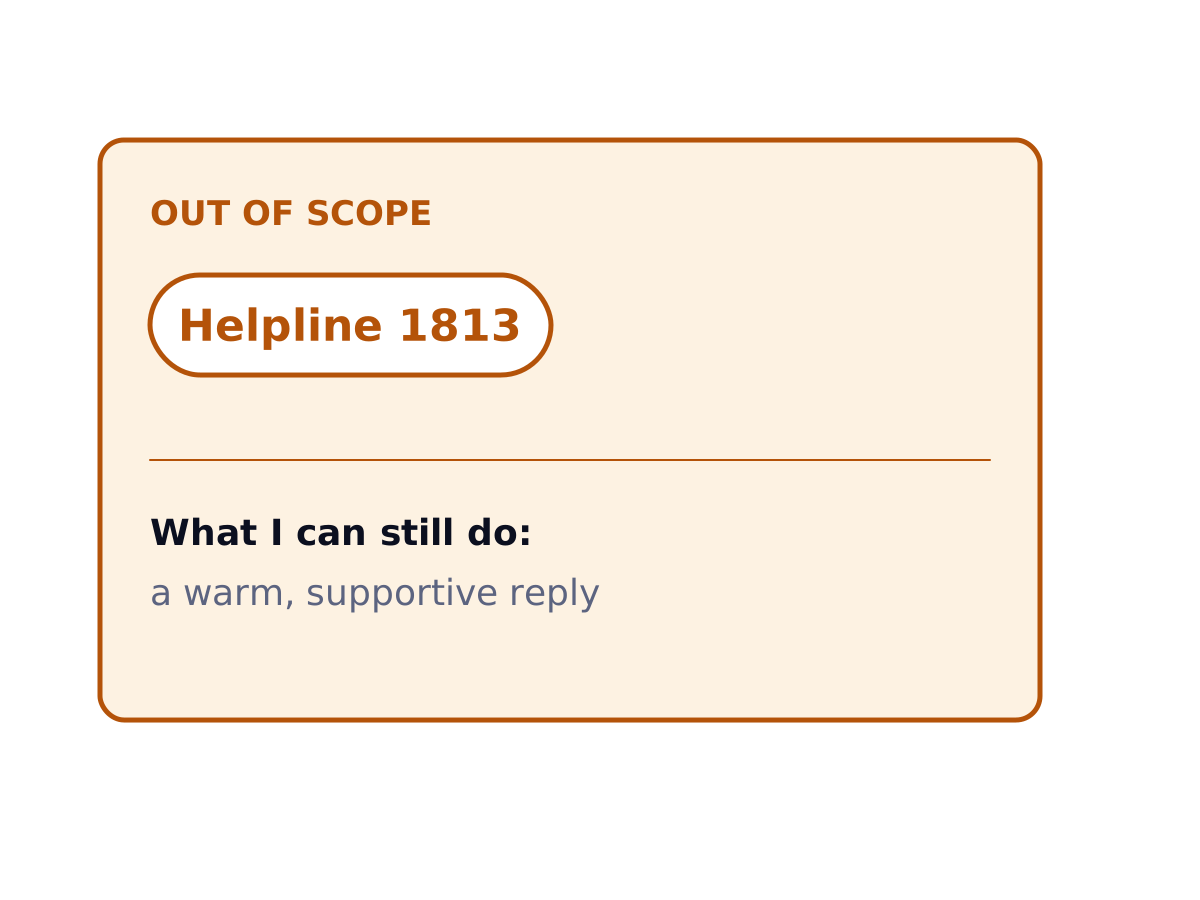 Pattern 13 · Chat or assistantOut-of-scope refusal with a next stepWhen a request leaves the assistant's remit it says so, offers a safe next step and, where lives may be at stake, a helpline. Decided by code, not by mood.Seen in a case