Ultra PatternsAI interface patterns with receiptsULTRA project

Partner study · Odisee UX Lab

Goose conversation guide

Communication coaching and wellbeing · Chat or assistant

StatusAnalysing
InterfaceChat or assistant
Patterns6
Participants4 per round
In one minuteWhat this case is, what was asked, what came out, and what to do with it.
The productGoose is a mobile conversation guide from the Odisee UX Lab. It helps people prepare for, or look back on, a difficult conversation with the method of connecting communication, and offers a practice mode.
The questionCan a chatbot be trusted when the model decides everything, or does a deterministic shell around the model, which keeps the conversation in a named phase, earn more trust?
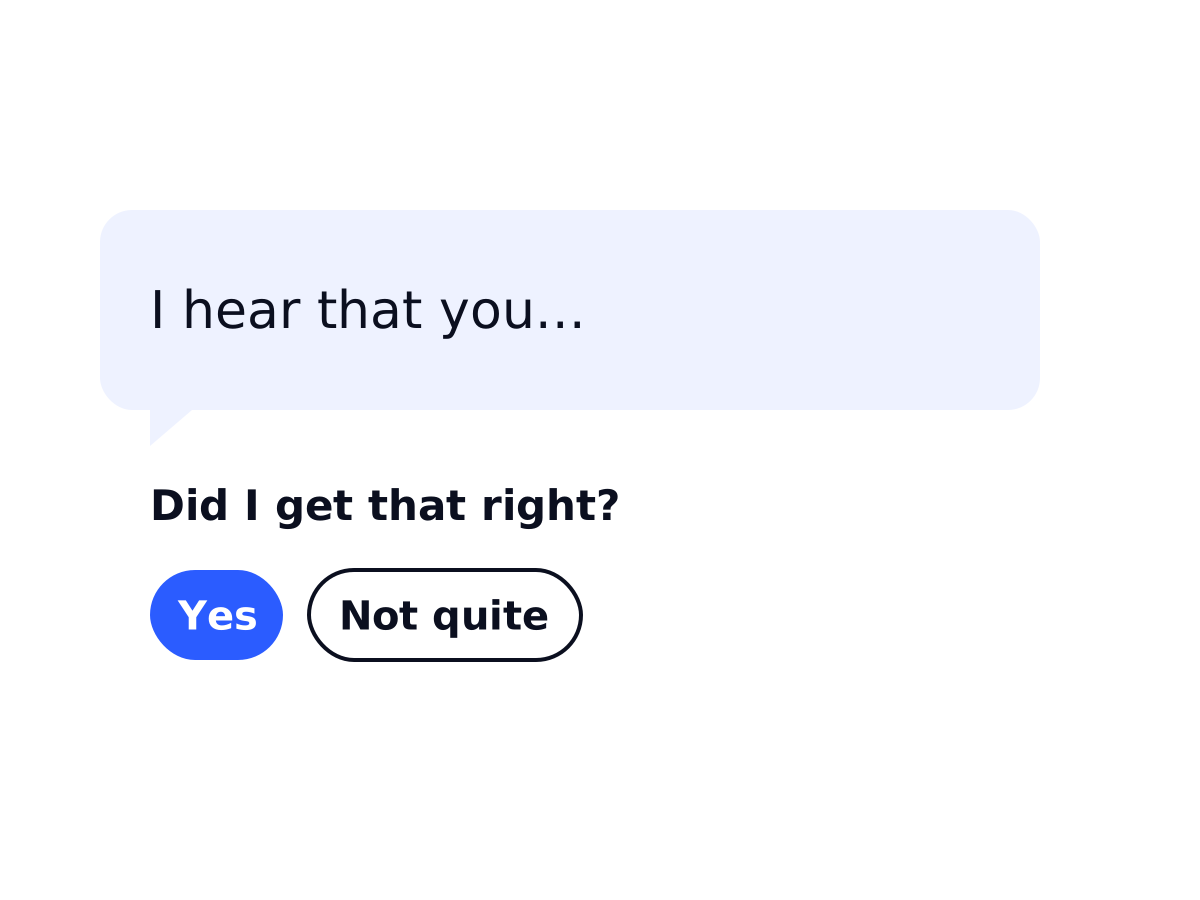
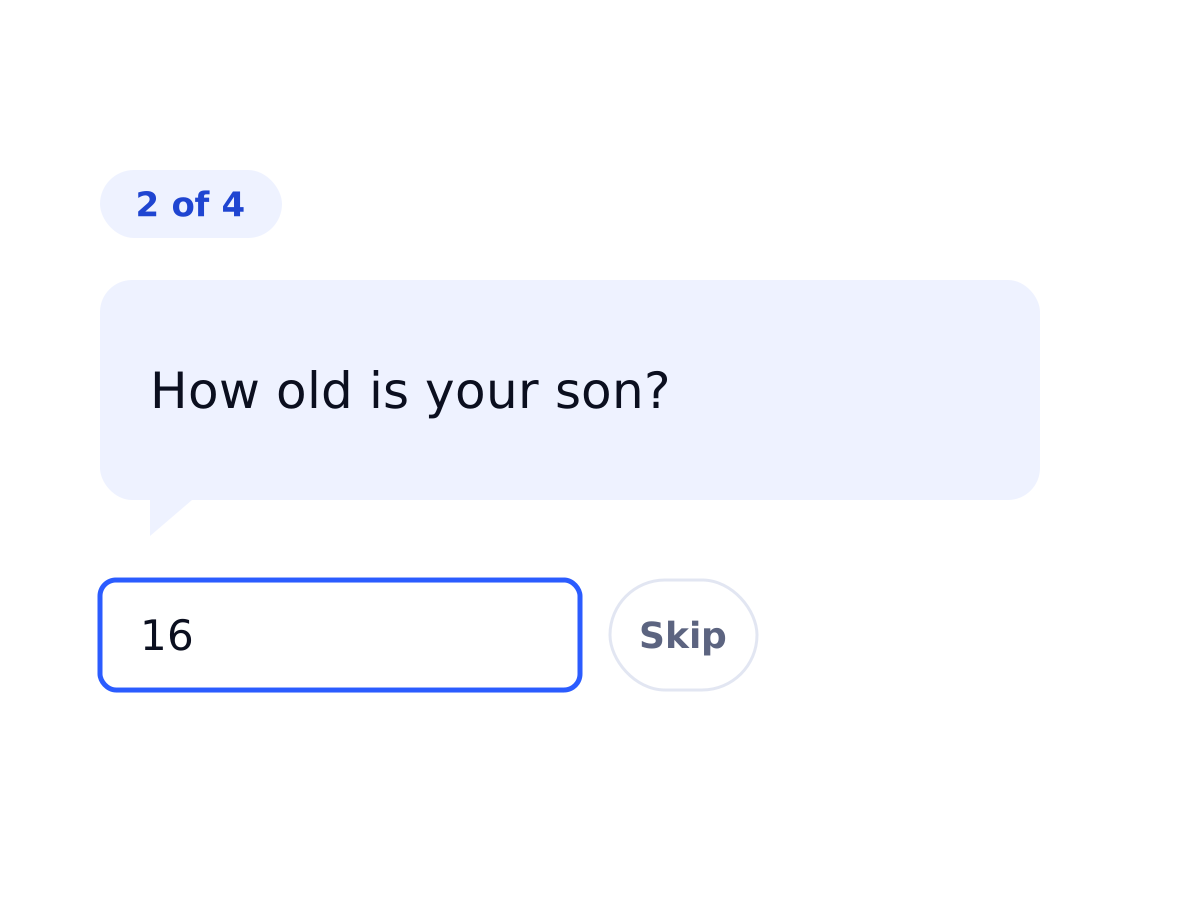
The answerThe staged version scored higher on credibility, appearance and usability, with three or four answers per round: a direction, not proof. Example sentences and paraphrasing were what people valued; inferring feelings they had not voiced cost them their sense of control.

What to take from it

Lessons for anyone building something similar, each linked to the card that carries the evidence. The findings below say where they come from.

In five minutesThe story, the numbers and the patterns that came out of it.

The story

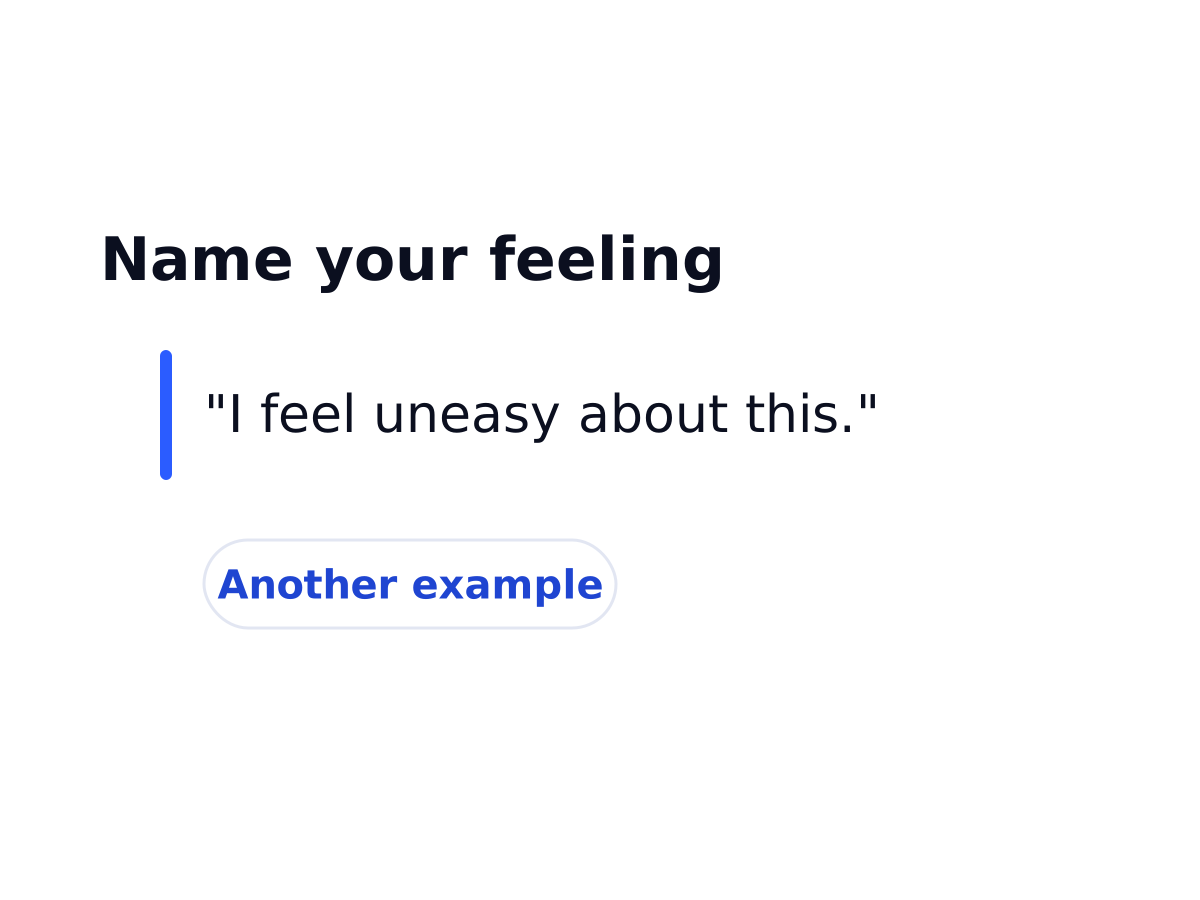
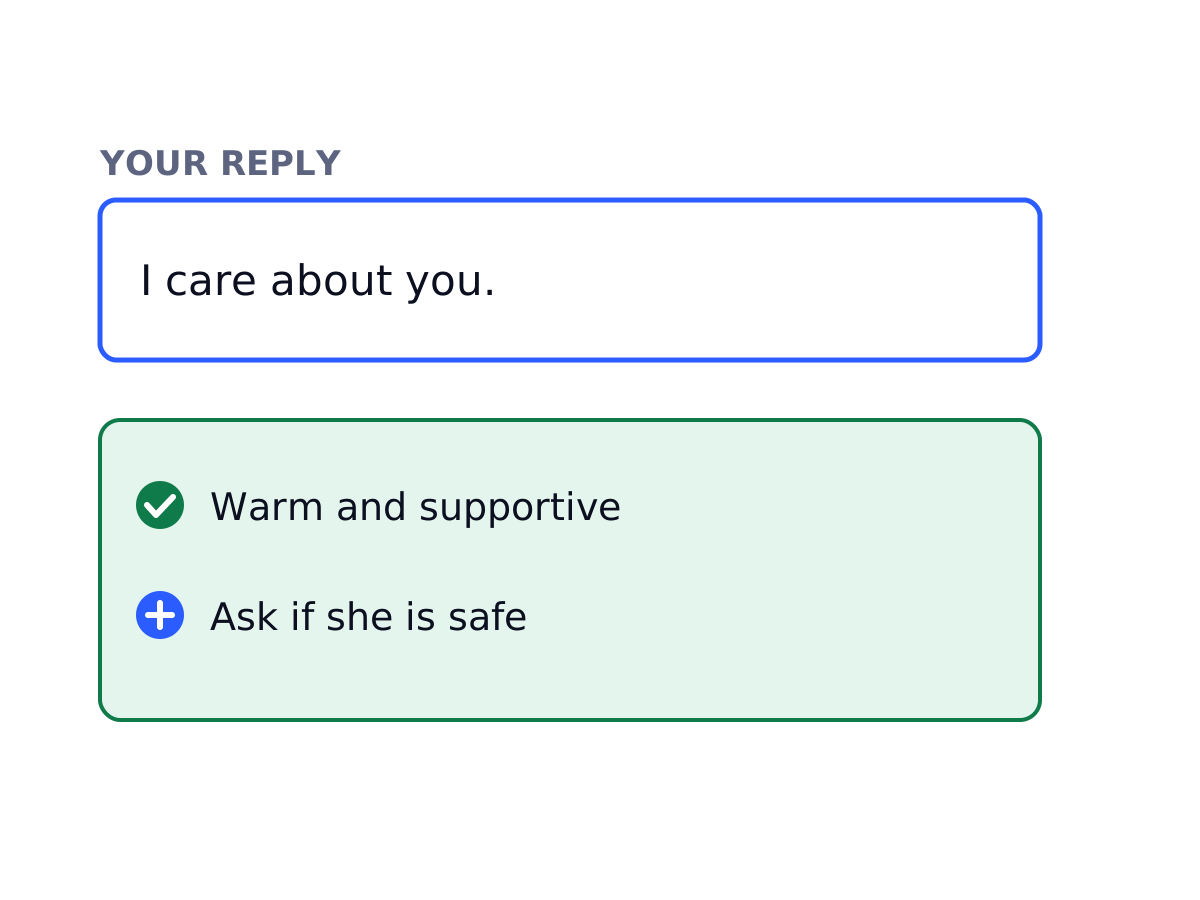
Goose is a mobile conversation guide from the Odisee UX Lab, led by Rutger De Wilde. It helps people prepare for, or look back on, a difficult or everyday conversation, with a friend or a family member for example, using the method of connecting (non-violent) communication: observe, name the feeling, share the need, make a request. It does not replace a professional; it helps people find their first words and offers a practice mode where they write a reply and get feedback on it.

The research question behind Goose is architectural: can a chatbot be trusted when the model decides everything? The team named four ways a free-running chatbot drifts:

  • it forgets which phase the conversation is in;
  • it slips out of its role;
  • it states things with unearned confidence;
  • it lets through answers it should have refused.

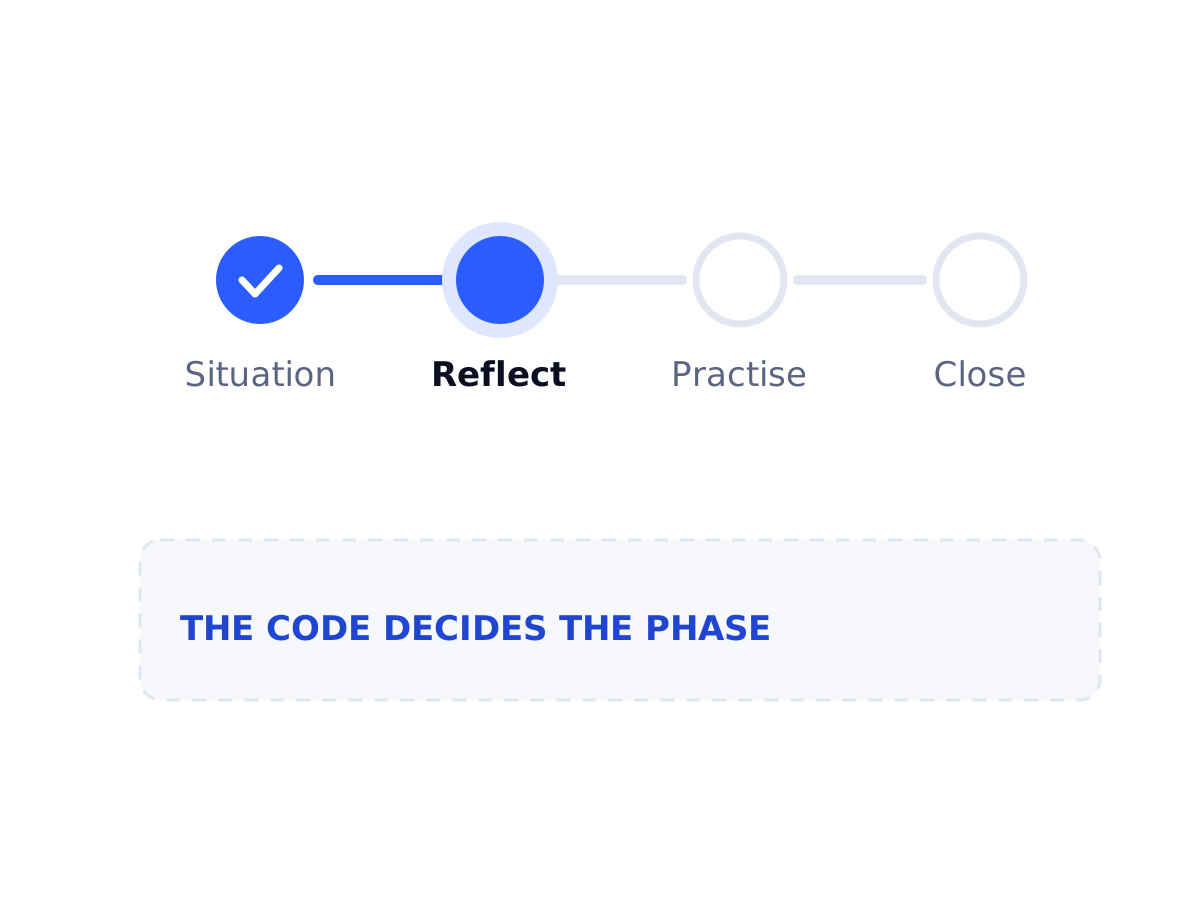
Version 4 answers that with a deterministic shell. The conversation always sits in one named phase, and each phase has its own narrow instruction and answer format. A controller in ordinary code reads the model’s signals and decides whether to stay, move on, refuse or retry. The house rule: the model reports, the code decides.

Two think-aloud rounds with four participants each are the receipts on this page; a three-week diary study with ten participants is planned to see whether people reach for the guide in real situations. The results are indicative, not proof: different participants per round, several changes at once, and a code audit that found the controller still followed the model’s own proposal in most cases. That audit is itself a lesson for anyone copying the pattern: the shell only works when the code really decides.
Patterns in this case

6 cards carry this case as a receipt or as a context. Each card says what to build, the words on screen and how to measure it.
The full studyFor readers who want the method, the exact numbers and what we do not know.

What we compared

Version 3, a free-form LLM chat tested on desktop, versus version 4, the same guide rebuilt as a staged conversation (a deterministic shell around the model) and tested on mobile. Four moderated think-aloud sessions per round with a SUPR-Q questionnaire (Standardized User Experience Percentile Rank Questionnaire: usability, credibility, appearance and loyalty).

What happened

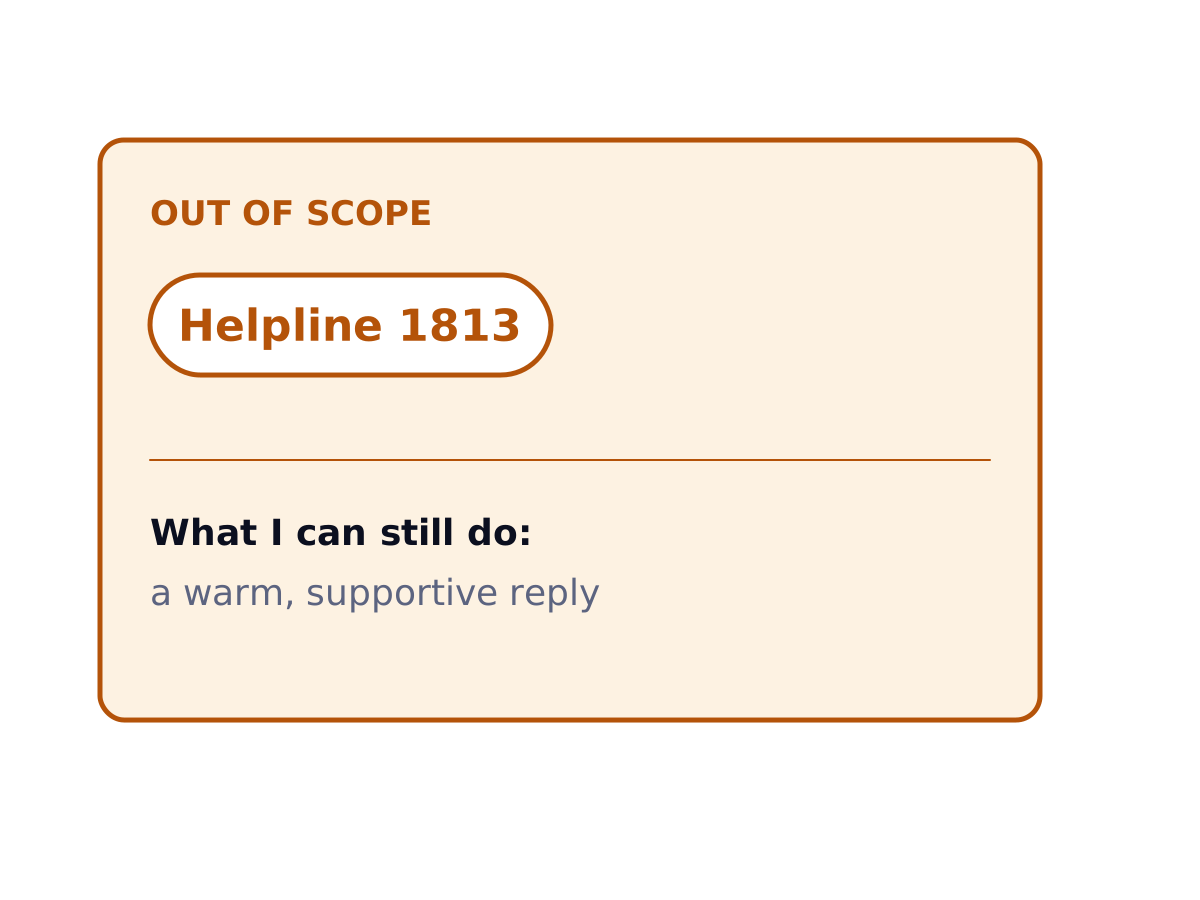
Three SUPR-Q dimensions rose from v3 (answered by three of four) to v4 (four participants): credibility 3.75 to 4.38, appearance 3.17 to 4.25, usability 3.38 to 3.75, on 5. The recommend question (0 to 10, the basis of the loyalty score) barely moved, 6.67 to 6.75, and stayed in the passive band. With three or four answers per round these are directions, not effect sizes. Three of four participants found the scope control clearly better. The example dialogue stayed the most valued feature. Two participants felt less in control when Goose inferred feelings they had not voiced, and one bug showed the helpline to one participant but not to another in a similar situation.

Receipt · Staged conversation: the code decides

NoteAn observation, not a controlled comparison. The Compared and Honestly rows say what else differed. Read the numbers as directions, not as effects.
CasePreparing difficult conversations, Goose conversation guide (Odisee UX Lab)
Comparedv3 free-form LLM chat vs. v4 staged conversation · Before and after: v3 free-form chat on desktop, v4 staged conversation on mobile, different participants
Peoplev3: four adults, 19 to 60, mixed chatbot experience, SUPR-Q answered by three; v4: four adults
Main resultSUPR-Q credibility (1 to 5) 3.75 in v3 (n=3) to 4.38 in v4 (n=4) higher with the staged version
Read asA direction, not an effect: different people per round, several changes at once, three to four answers per round.
SecondaryUsability 3.38 to 3.75
SecondaryAppearance 3.17 to 4.25
SecondaryRecommend question 6.67 to 6.75 on 0 to 10, still in the passive band
SecondaryScope control judged clearly better by 3 of 4
Methodsthink-aloud · SUPR-Q · semi-structured interviews · eye-tracking and facial expression analysis (v3)
HonestlyDifferent participants per round, several changes at once (architecture, mobile, visual design), four people per round. Indicative. Not attributable to this pattern alone; a controlled comparison is the next step.
SourceDe Wilde (2026), Goose project summary, Odisee UX Lab, internal · this page · study run 2026 · partner study

A receipt is the result of one test, printed on the card: the case, what was compared, how many people took part, the main result, the methods, and what we do not know. The plan written before the analysis is the study card. How a pattern earns its label.

Compass context

Users' AI familiarity: mixed · If wrong: a lot · Content: judgement · Personal data: sensitive · Starts: the user (how the compass reads a case)

Next

Bring your case